
Index of English Translations of Sumerian Clay Tablets
Sumerian clay tablets that, as far as we could check, had no published English translation. We translate them ourselves. The page linked above is the index of the series. A new tablet is a new row there, not a list copied into every story.
All translations are new and unofficial, made from transliterations on the Cuneiform Digital Library Initiative (CDLI), and may contain errors. Tablet images are credited to the holding institutions and CDLI. Dates use the conventional middle chronology and are approximate.
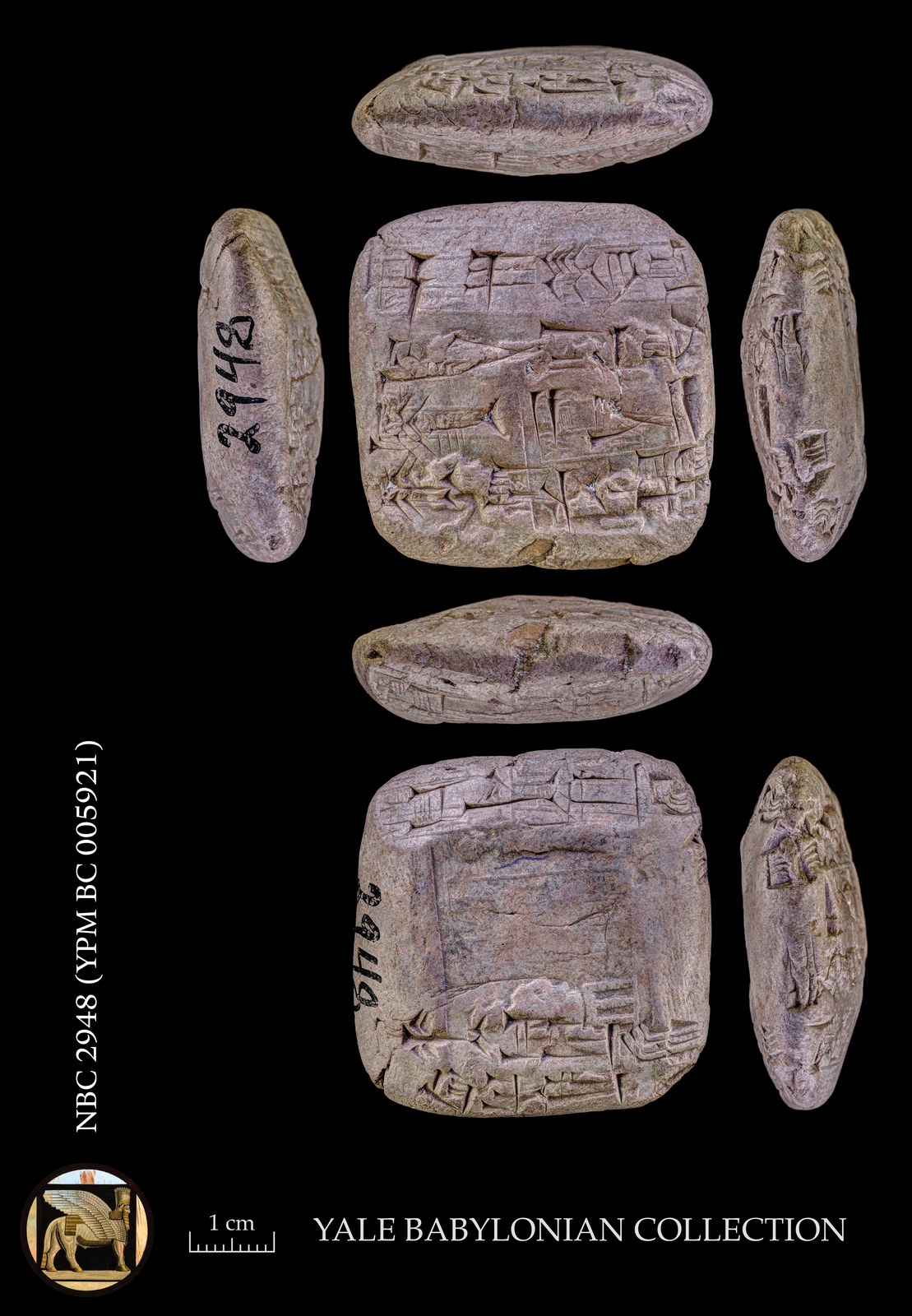
“2 barig 3 ban of barley, the allotment of Lu-daga, who has fled: left at the granary, because of the ruined work.”
Nine short lines from Umma. A man named Lu-daga is marked as fled. His barley ration is not paid out. It stays at the granary, and the scribe gives a reason.
The tablet comes from Umma, in what is now southern Iraq, in the third year of King Šu-Suen, the year “Simanum was destroyed”, around 2035 BC.
What the lines say
“2 barig 3 ban of barley, the allotment (šuku) of Lu-daga, fled (zah): left at the granary (guru7-a tak4-a), because of the ruined work (mu a2 gul-la-še3). Sealed by Šeškalla. Year: Simanum was destroyed.”
Two barig and three ban is 150 litres. An allotment, šuku, is the regular barley share of a worker or holder of a plot. The word for fled is the same one that runs through this series.
“Left at the granary” means the barley was not issued. “Because of the ruined work” is the scribe’s own reason. The tablet does not say what work, or how it was ruined.
Who sealed it
The seal belongs to Šeškalla, “scribe, son of Tirgu”. He is the man who authenticated the note. Lu-daga himself does not seal; he is the one who is gone.
What the tablet doesn’t tell us
We don’t know what Lu-daga’s work was, or what “ruined” meant on the ground: abandoned, unfinished, or spoiled.
We don’t know whether he fled before or after the work failed, or whether the failure was the reason he left.
We don’t know what became of him, or of the 150 litres. The tablet only records that they stayed where they were.
Allotments and flight at Umma
Umma’s archive is full of labour and ration notes. When a worker fled, the office often wrote it down, sometimes in a single word beside a name. Here the office goes a step further: it freezes the allotment and states a cause. That is rarer.
Here we are speculating, but holding back the barley would protect the granary’s books if the man never returned. The tablet itself says only that the allotment was left, and why.
The tablet in full (our translation)
Front: 2 barig 3 ban of barley, the allotment of Lu-daga, who has fled: left at the granary, because of the ruined work.
Back: Sealed by Šeškalla. Year: Simanum was destroyed.
Seal: Šeškalla, scribe, son of Tirgu.
How we read it
Key lines in transliteration: sze szuku-ra lu2-da-ga zah3, “barley, the allotment of Lu-daga, fled”; guru7-a tak4-a, “left at the granary”; and mu a2 gul-la-sze3, “because of the ruined work”.
Uncertain: what “ruined work” (a2 gul-la) referred to in practice, and whether Lu-daga fled before or after that failure.
Our confidence: high. The wording is short and clear; only the background of the “ruined work” is unknown.
This translation is new and unofficial, made from the CDLI transliteration, and may contain errors. “Untranslated” means we found no translation on CDLI or in the tablet’s publication history (BPOA 7, 2009 (Sigrist and Ozaki), a transliteration catalogue of Yale tablets, and a catalogue entry in CBCY 3, 2001). Dates use the conventional middle chronology and are approximate.
For the full description of sources, method, uncertainties, dating conventions, limitations, and how to report corrections, see About the Translations and Methodology.