
A reading · 11 October 2026
The origin of the div
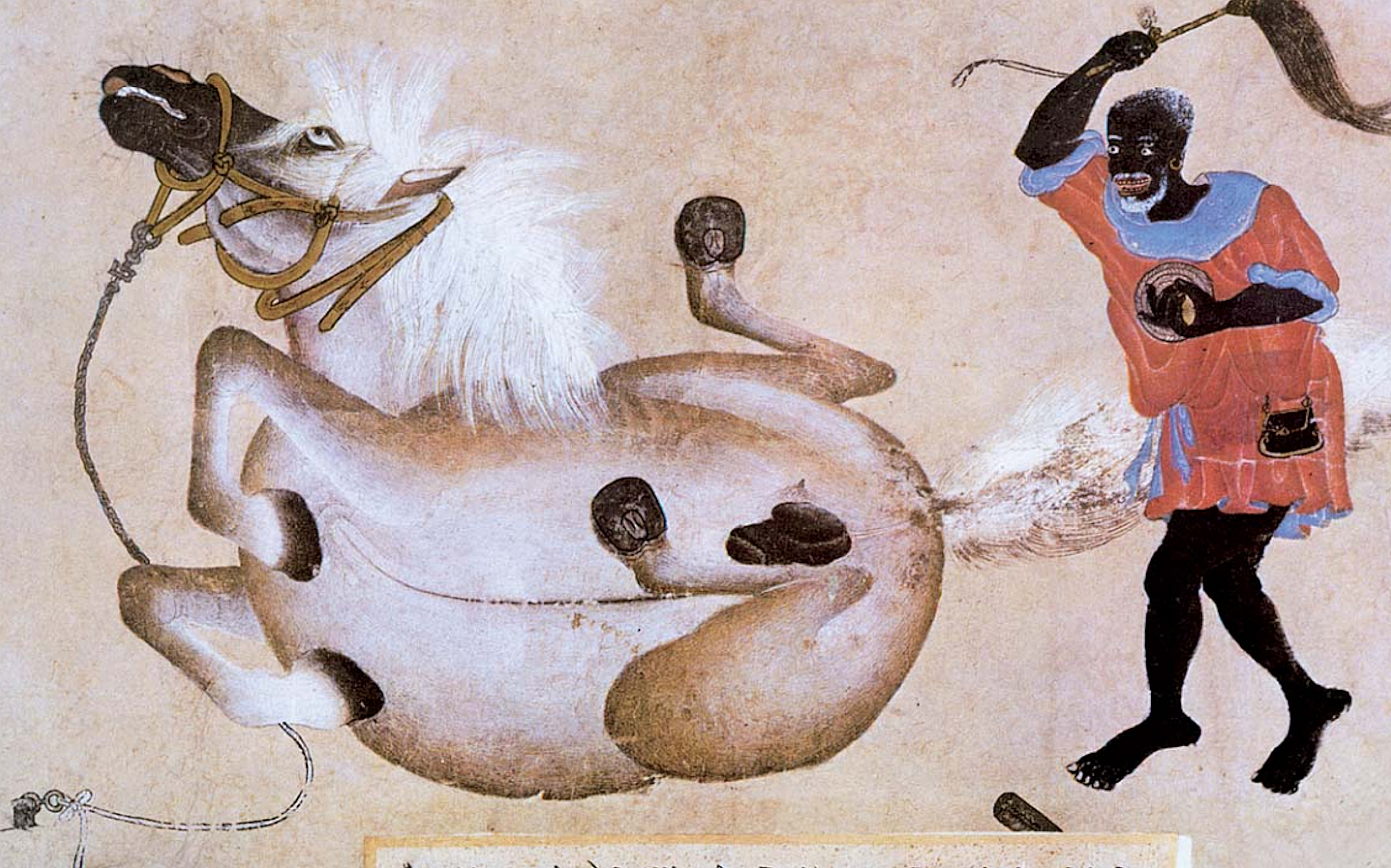
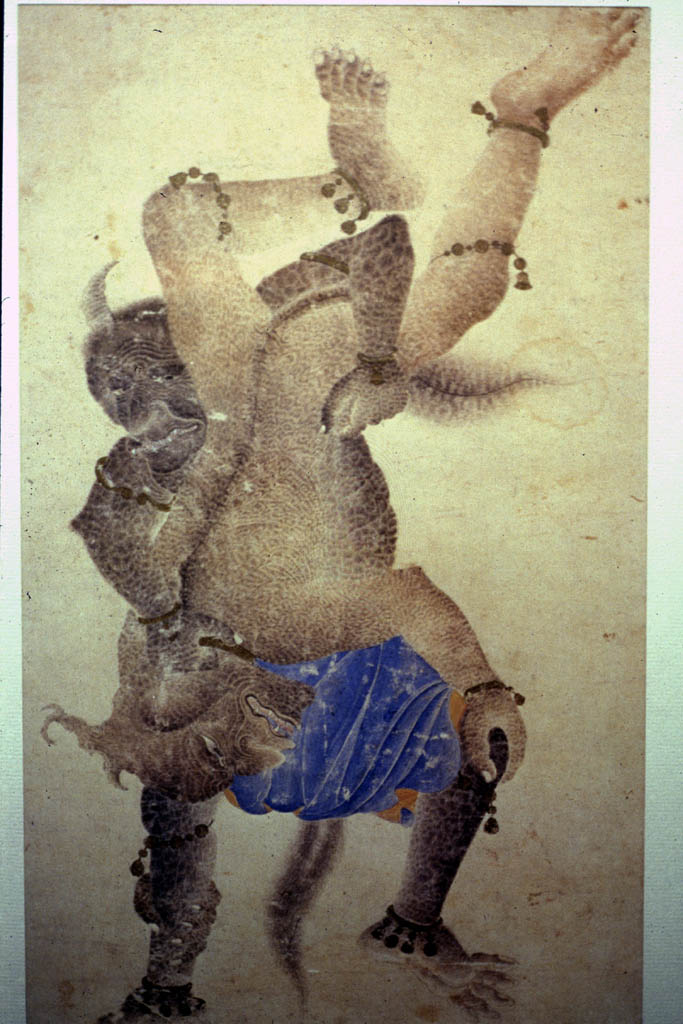
A demon is walking toward you, and the horse is already over his shoulder. The animal hangs the way a killed thing hangs, head down, legs loose.
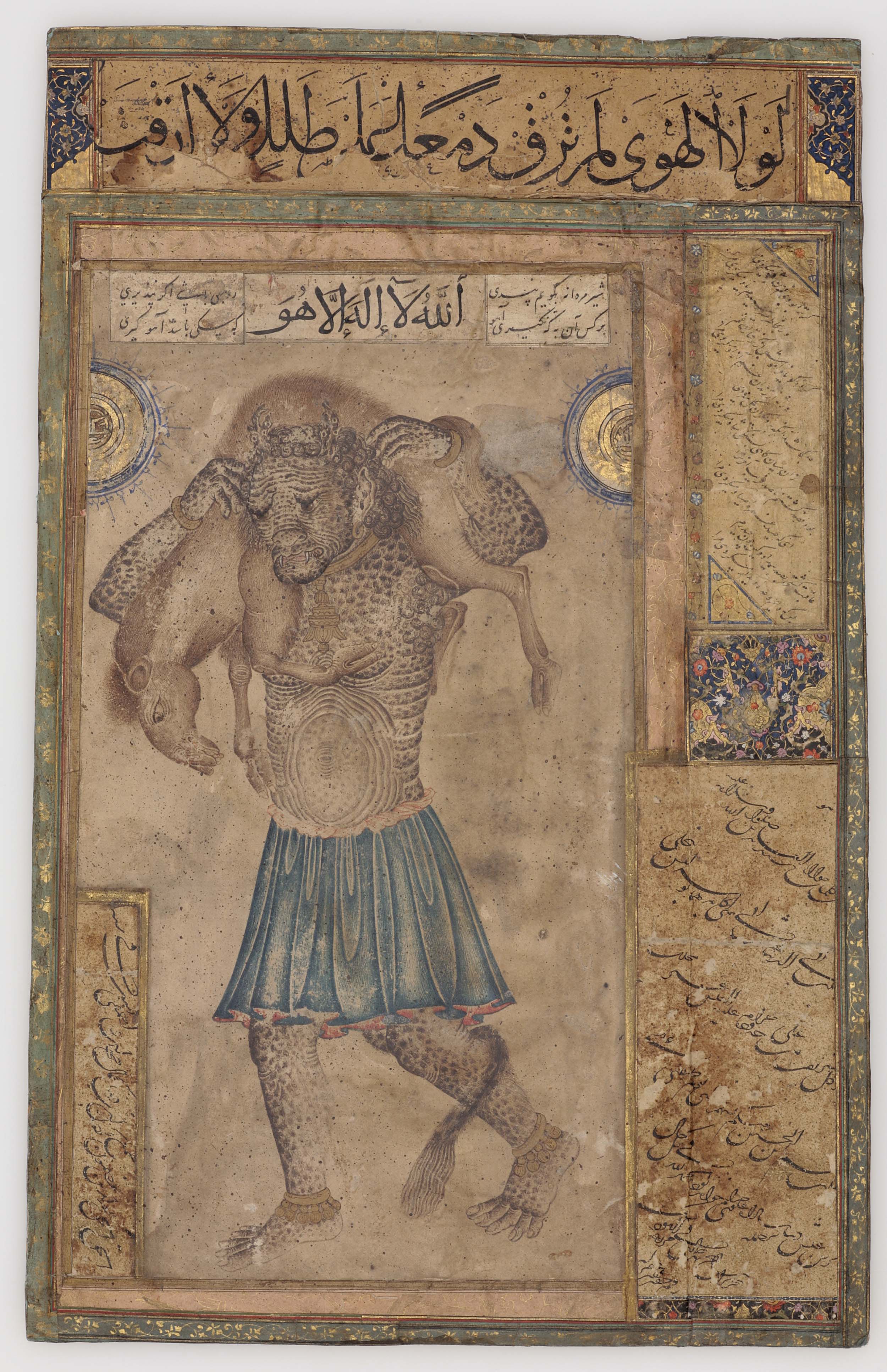
“The figures he sets against one another, like puppet-players on a curtain, are the protagonists of an event we do not know.”
Mazhar Şevket İpşiroğlu and Sabahattin Eyüboğlu, 1954
The paper is the colour of dust. He wears a blue skirt, and the brightness is the gold at his ankles. The pictures are called Siyah Qalam, the black pen. On this page the words are turned round: Qalam Siyah. For five centuries no one has been able to say which story he is in.
He has a name older than the sheet. In Persian he is a div.
Ferdowsi of Tus gave the div his great written life in the Shahnameh, finished around 1010, some four centuries before a painter in Tabriz made the picture above. Mahmoud Omidsalar, in the Encyclopaedia Iranica, sets down how the poem draws him: often black, with long teeth, black lips, blue eyes, claws, and a body of thick hair. He eats people. He also keeps kings, and armies, and a country of his own. The most famous of those countries is Mazandaran.
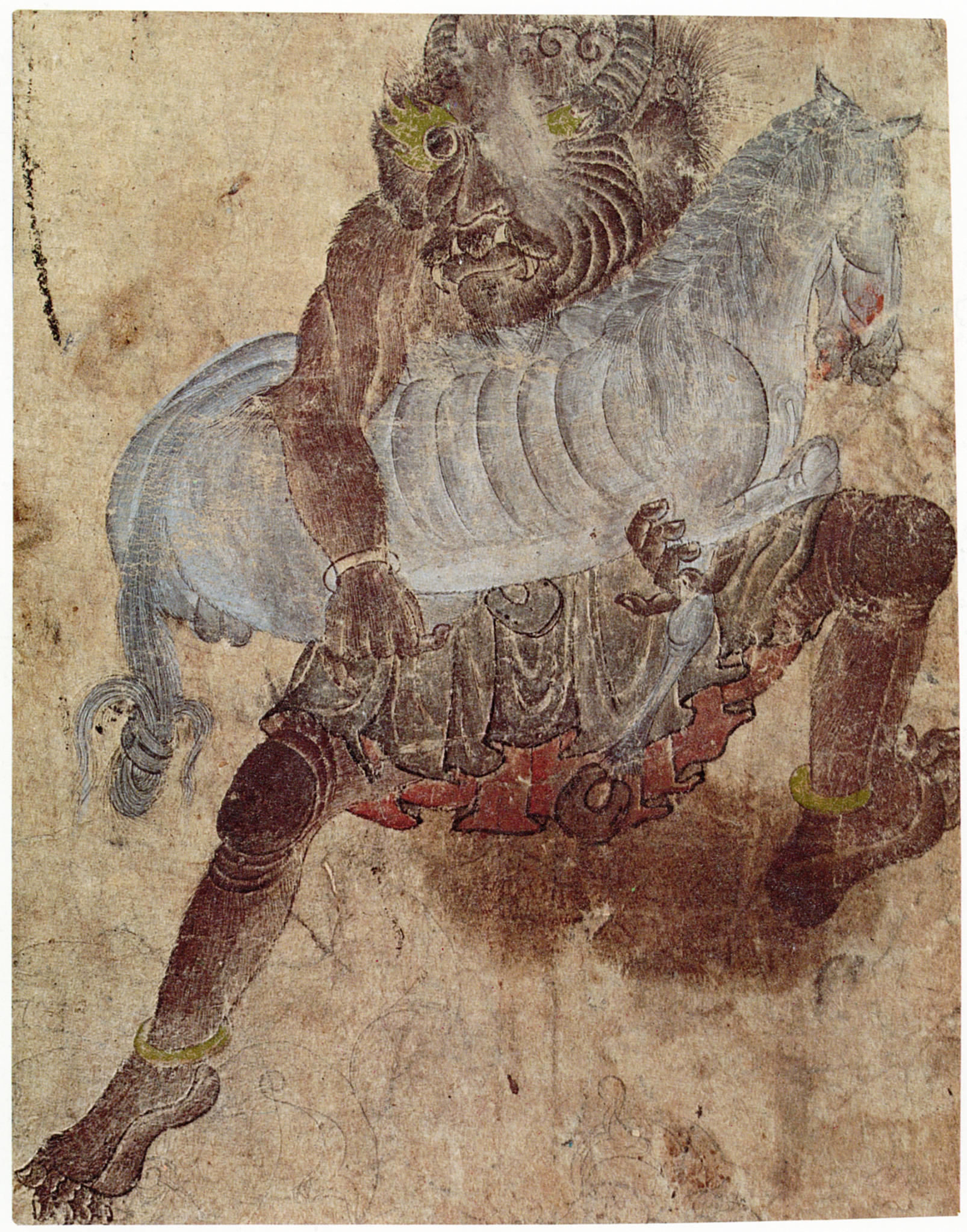
Three of them would have been in any teller’s head. Tahmuras, called Divband, the binder of demons, defeated the divs, and they taught him writing, or they built for him. Jamshid ruled them, and when they served him they were builders. The White Div of Mazandaran blinded Kay Kavus and the Iranian army by sorcery. Rustam killed him, and the demon’s blood gave the men back their sight. Painters in Iran were already showing that fight in the 1330s. A small Shahnameh page now in the Metropolitan Museum puts it in a cave; the museum places the page in Iran, probably Isfahan, and a later restorer who did not know the story joined the severed leg back on. The Great Mongol Shahnameh, of about 1330, was probably painted in Tabriz. The same city. The same kind of being. A century and a half before these sheets.
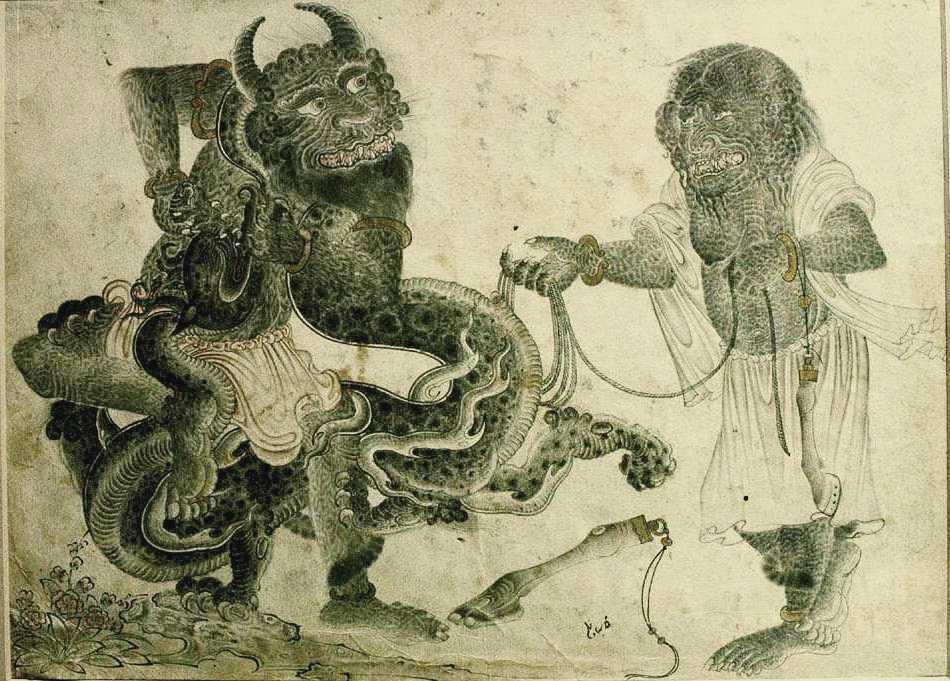
The demon with the ox is not a verse from that poem. Nothing written on the sheet says so, and it would be a falsehood to pretend otherwise. He is the kind of creature the poem had already spent four hundred years describing. A div who hauls, who binds, who serves.

The demon and the ox
The gold is worn where a thumb would rest. That is the first thing the sheet tells you, before any story.

It is Khalili MSS 1065. Coarse paper, 39 by 24.5 centimetres, the colour of dust: a demon, a fallen man, an ox held up by the tail. Whoever catalogued it was careful, and still allowed that a storyteller may have carried pictures of this kind and held them up. In that century he was a qessa-khwan. In Iran he is still a naqqal.
So give him the square, and then take it back.
The heat has dropped. Tabriz, late in the fifteenth century, a place where people are in no hurry to go indoors. A roll of paper opens. Nobody in the crowd has come to check a poem afterwards in a book. They stay because the demon is coming straight at them. Horns through a mess of curls. Gold at the wrist, gold at the ankle, bright only because the rest of the drawing is not. One hand has a man who has already fallen. The other has an ox by the tail, the whole animal hanging, the way you carry a thing you no longer have to fight. A child laughs. The man beside the child does not. The teller puts a finger on the tail. He does not give them the ending. An ending is for the people who come back, and for a bowl that is not empty.
Bayhaqi, four centuries earlier, had tried to write a serious history in Persian and was annoyed to find that people would rather hear about divs and paris and ghouls. He was right about people. He never saw this sheet. Neither did anyone who thought to write the words down. The evening is only a way of standing in front of the picture. The dirt ground into the paper is the part that does not need to be imagined. They are not the same thing.
Out of Tabriz
The albums are in Istanbul. That is where the paper went. It is not where the demons come from.
In 1514 Selim I entered Tabriz, and the albums went with him to the Ottoman treasury. They are still there. Some forty years later an artist signed a demon “in the style of Siyah Qalam.” He was not claiming the manner. He was borrowing it, and he said so.
The poem had travelled by a kinder road. In 1568 Shah Tahmasp sent the great Shahnameh made in his workshop at Tabriz to the Ottoman sultan Selim II. One page, painted about 1525 and attributed to Sultan Muhammad, is Tahmuras defeating the divs: spotted bodies, the king’s mace, the binding. The book arrived as a Persian poem and as an Iranian picture. At the end of the same century the poem was still being copied in India. An early Mughal Shahnameh, now in the John Rylands Library in Manchester, was finished in 1597, the paintings in a Mughal hand. Where a court wanted this story, it wanted it in Persian, and the div went inside the book.
Herat and Samarkand had been painting the same poem all through the fifteenth century. They were not outside it. They were Persian-reading courts, the literature at work beyond Tabriz. When a museum will not decide, and writes “Iran or Central Asia,” the hesitation is about which workshop. It is not a hesitation about the creature.
A Chinese demon, a European devil, a spirit of the steppe: those are other lives. A painter in Tabriz could take a shape from them. Taking a shape is not the same thing as being given a soul.
The black pen, a Silk Road art
Ekrem Işın called the black pen a Silk Road art. Look at what a painter in Tabriz had seen, and the phrase holds. Look at the demon, and it does not.
Probably Tabriz, and late in the fifteenth century. In 1478 the Aqqoyunlu made the city their capital and brought the court from Shiraz. It was already one of the great workshops of Iranian painting. A century earlier the Jalayirid court had held Baghdad and Tabriz both, and black pen was already a way of drawing there. This is not a ring of foreign countries pressed against Iran. It is the same art, at other hours.
Then the writing in the margin. When it can be read it says kar-i ustad Muhammad Siyah Qalam, the work of Master Muhammad Siyah Qalam. A painter does not usually call himself master, and he does not sign upside down, in whatever corner the page happened to offer. Medine Irak set the difficulty out in 2018. A Sotheby’s note of 2024 adds that many of the inscriptions are probably the hand of the Ottoman sultan Ahmed I, who reigned from 1603 to 1617. If that is right, a reader in Istanbul wrote a Persian name across Iranian pictures more than a century after they were made. The name is what one owner believed. It is not a signature, and it does not make the sheets Ottoman. Whether a painter called Muhammad ever lived is still open.
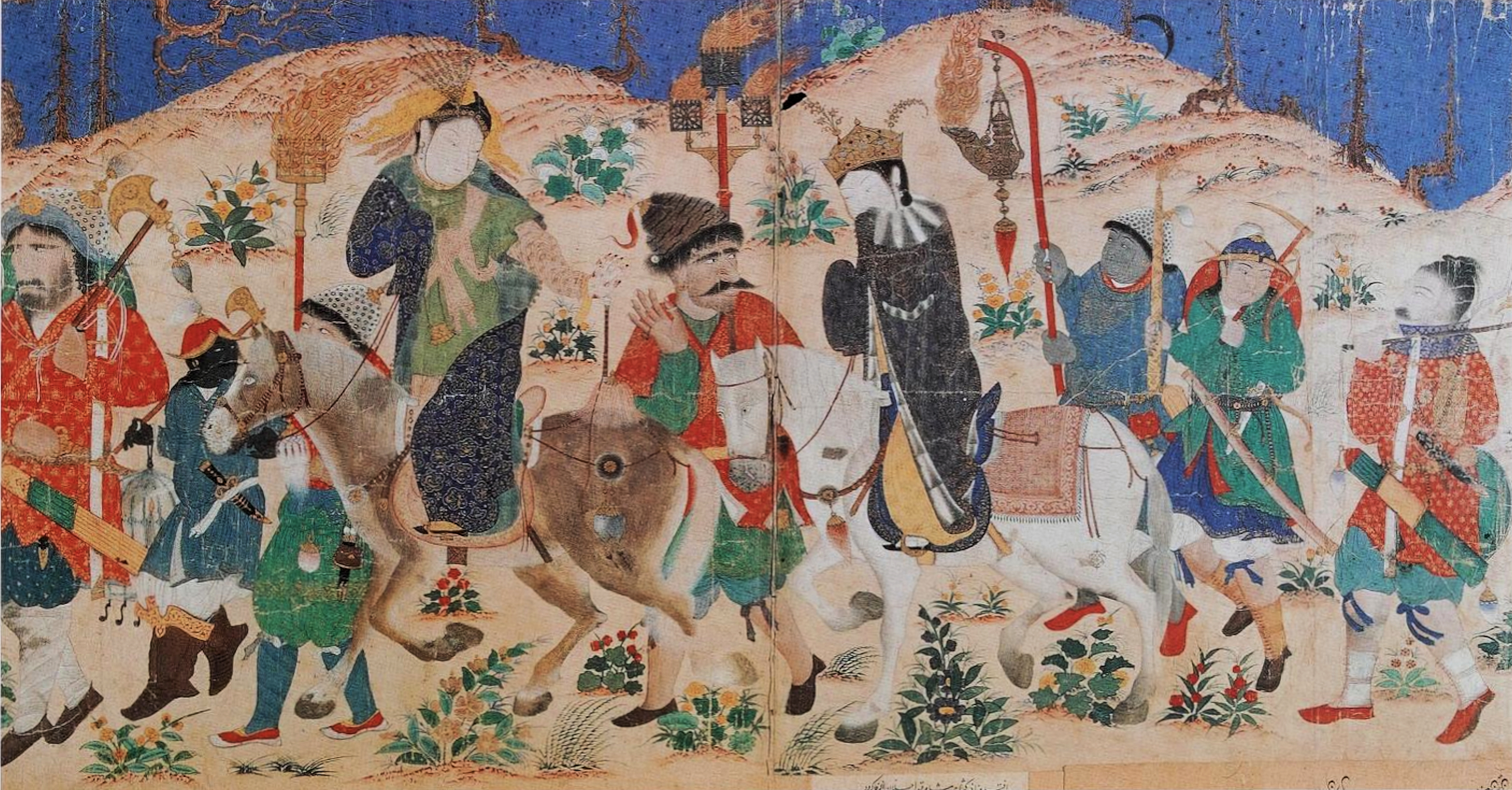
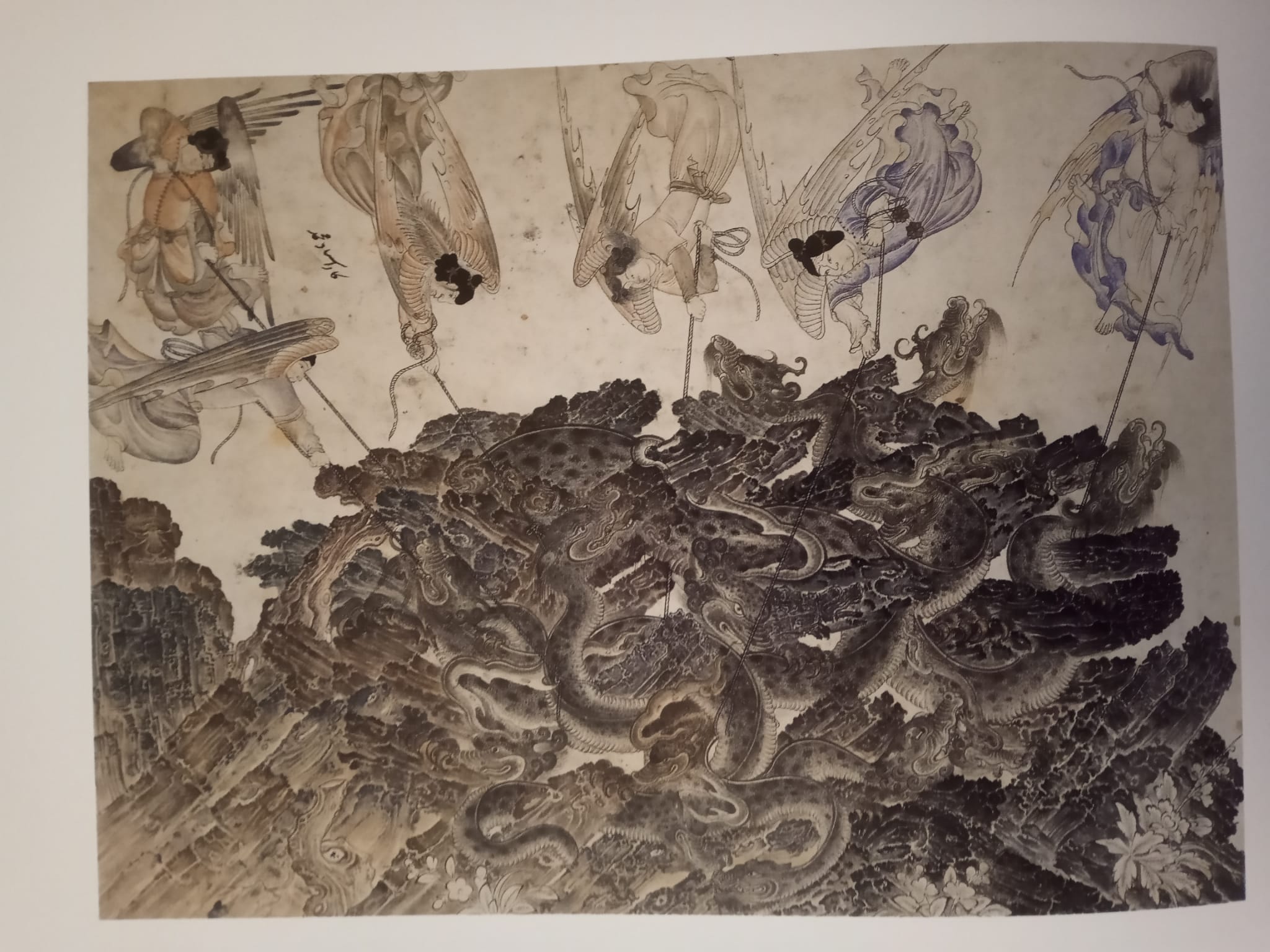
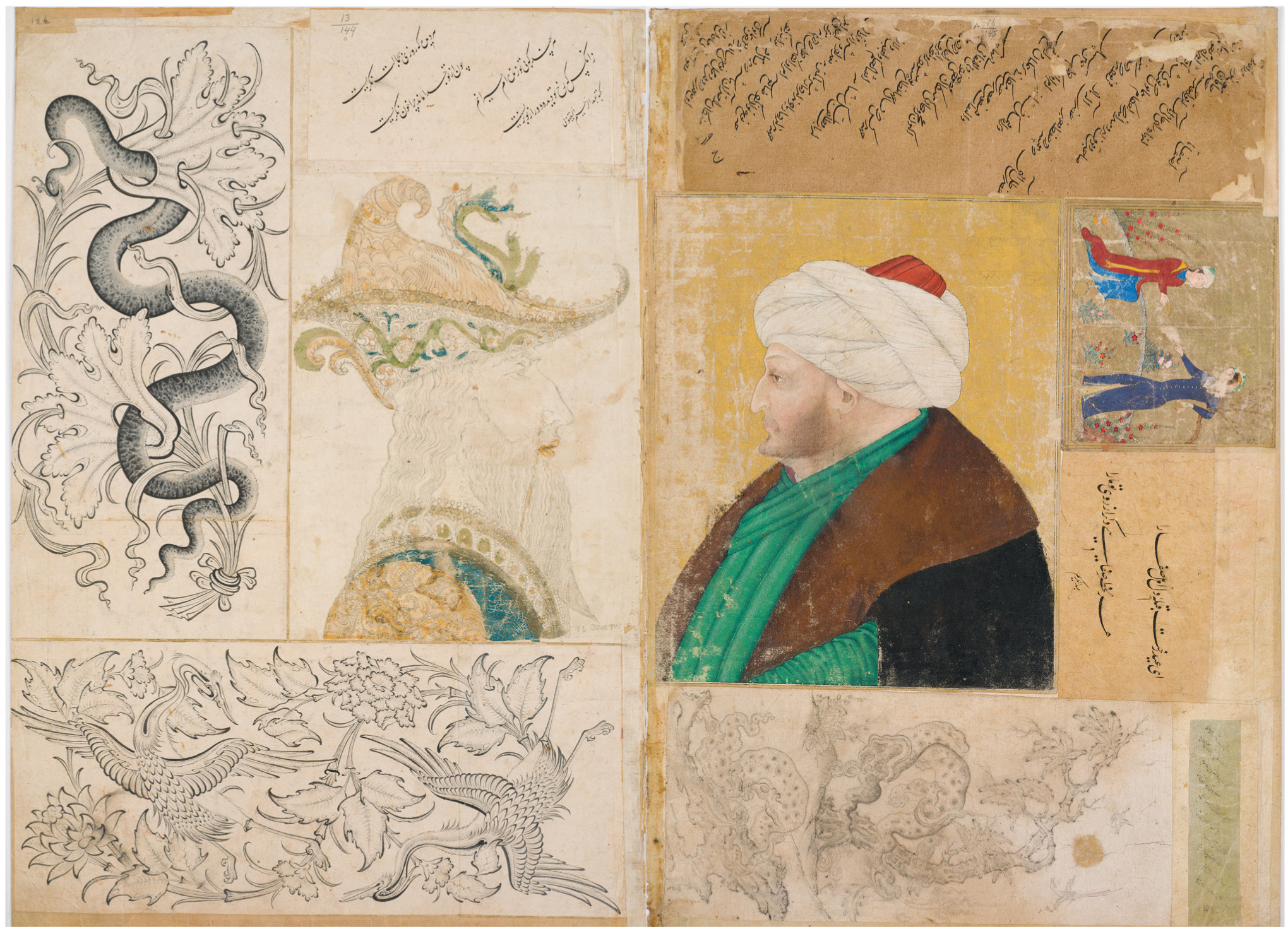
A page of the Shahnameh keeps its verse. Cut the page out and the poem usually survives somewhere else. These pictures were not made for a book we still have. There is no text on them, apart from later panels of verse and the notes pasted round the edges. Many were cut down, perhaps from a scroll, and set into albums beside paintings that have nothing to do with them. The meaning may have lived in a voice, in a square in Tabriz, in a joke everyone in the crowd understood. In 2018 James White wrote that strikingly little attention had been paid to what the images depict. No one has yet matched a demon page to a written story its first viewers would have known.
On a sheet in the Freer Gallery a fettered demon holds a Chinese blue-and-white bottle. That is the road, sitting in the hand. Take the bottle away. A div is still standing there, chained, the way Tahmuras left his demons.

The Qalam Siyah catalogue
The albums kept in Istanbul, the two demons in London, and the sheets that were carried further on.


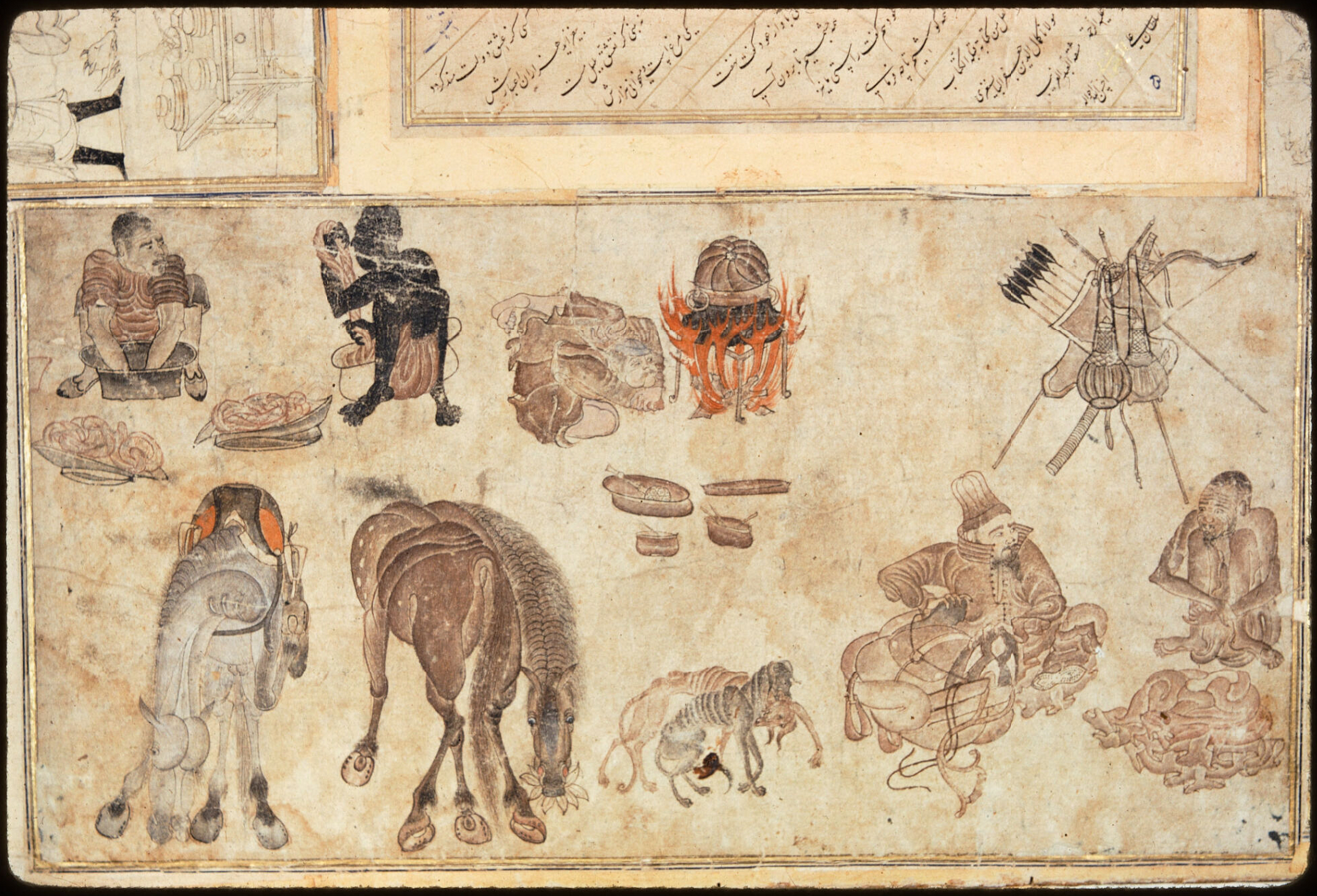
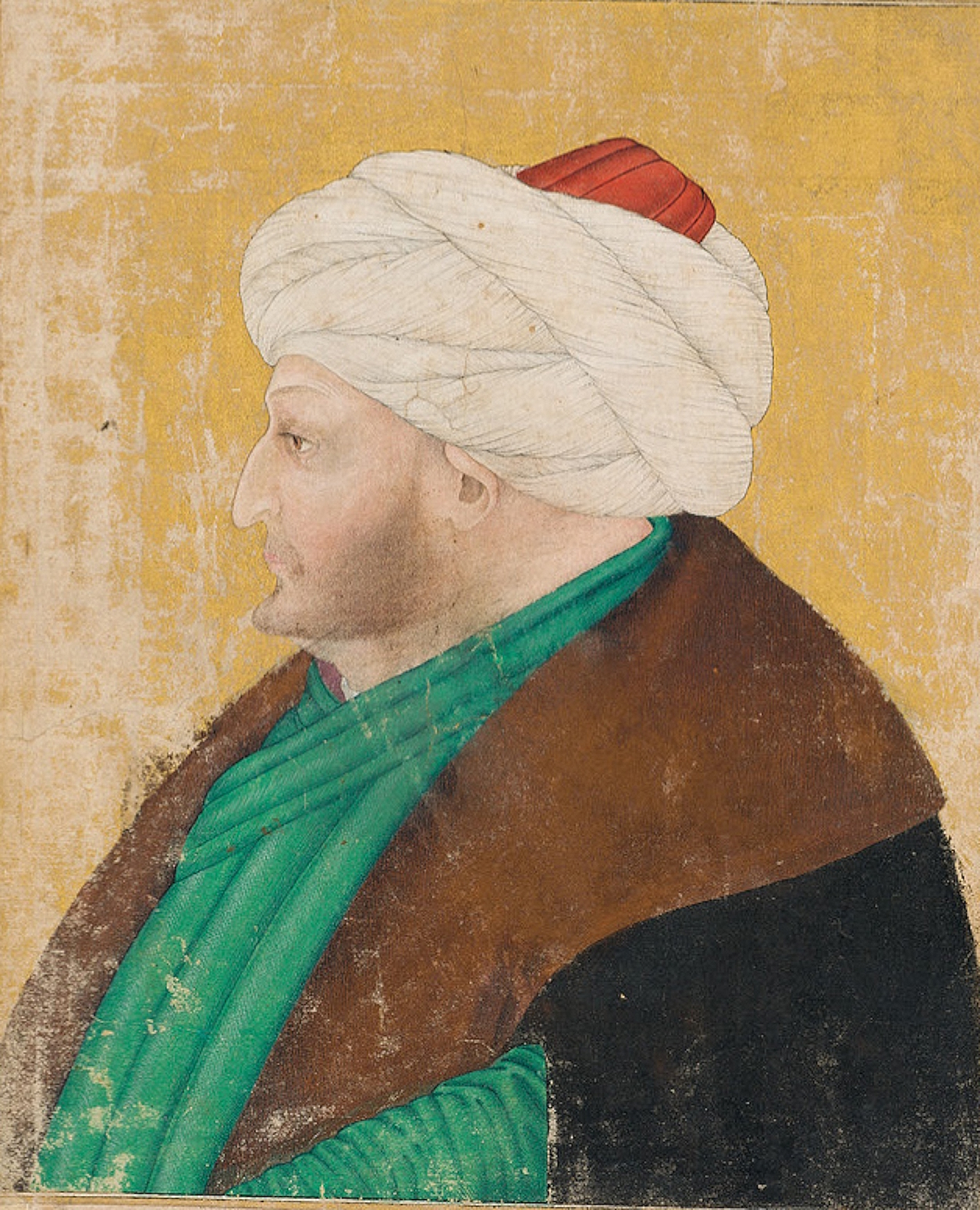
![C007 · Sultan Mehmed II smelling a rose, attributed to Sinan Beg [desc.]](https://fire-of-life.org/wp-content/uploads/2026/10/C007_TSMK_10a_Sultan-Mehmed-II-smelling-a-rose-attribu.jpg "Topkapı Palace Museum Library, Istanbul")
![C008 · A dark figure crouching beside a staff [desc.]](https://fire-of-life.org/wp-content/uploads/2026/10/C008_TSMK_23a_A-dark-figure-crouching-beside-a-staff-d.jpg "Topkapı Palace Museum Library, Istanbul")
![C009 · A nomad family with a horse [desc.]](https://fire-of-life.org/wp-content/uploads/2026/10/C009_TSMK_23b-1-of-2_A-nomad-family-with-a-horse-desc.jpg "Topkapı Palace Museum Library, Istanbul")

![C013 · A seated figure wrapped in a dark cloak [desc.]](https://fire-of-life.org/wp-content/uploads/2026/10/C013_TSMK_27a_A-seated-figure-wrapped-in-a-dark-cloak.jpg "Topkapı Palace Museum Library, Istanbul")
![C014 · Emaciated Horse [Burrow?] with Two Demons](https://fire-of-life.org/wp-content/uploads/2026/10/C014_TSMK_27b-27v_Emaciated-Horse-Burrow-with-Two-Demons.jpg "Topkapı Palace Museum Library, Istanbul")
![C015 · Two riders in a wintry landscape with bears, attributed by an inscription to Ahmad Musa [desc.]](https://fire-of-life.org/wp-content/uploads/2026/10/C015_TSMK_28a-28r_Two-riders-in-a-wintry-landscape-with-be.jpg "Topkapı Palace Museum Library, Istanbul")
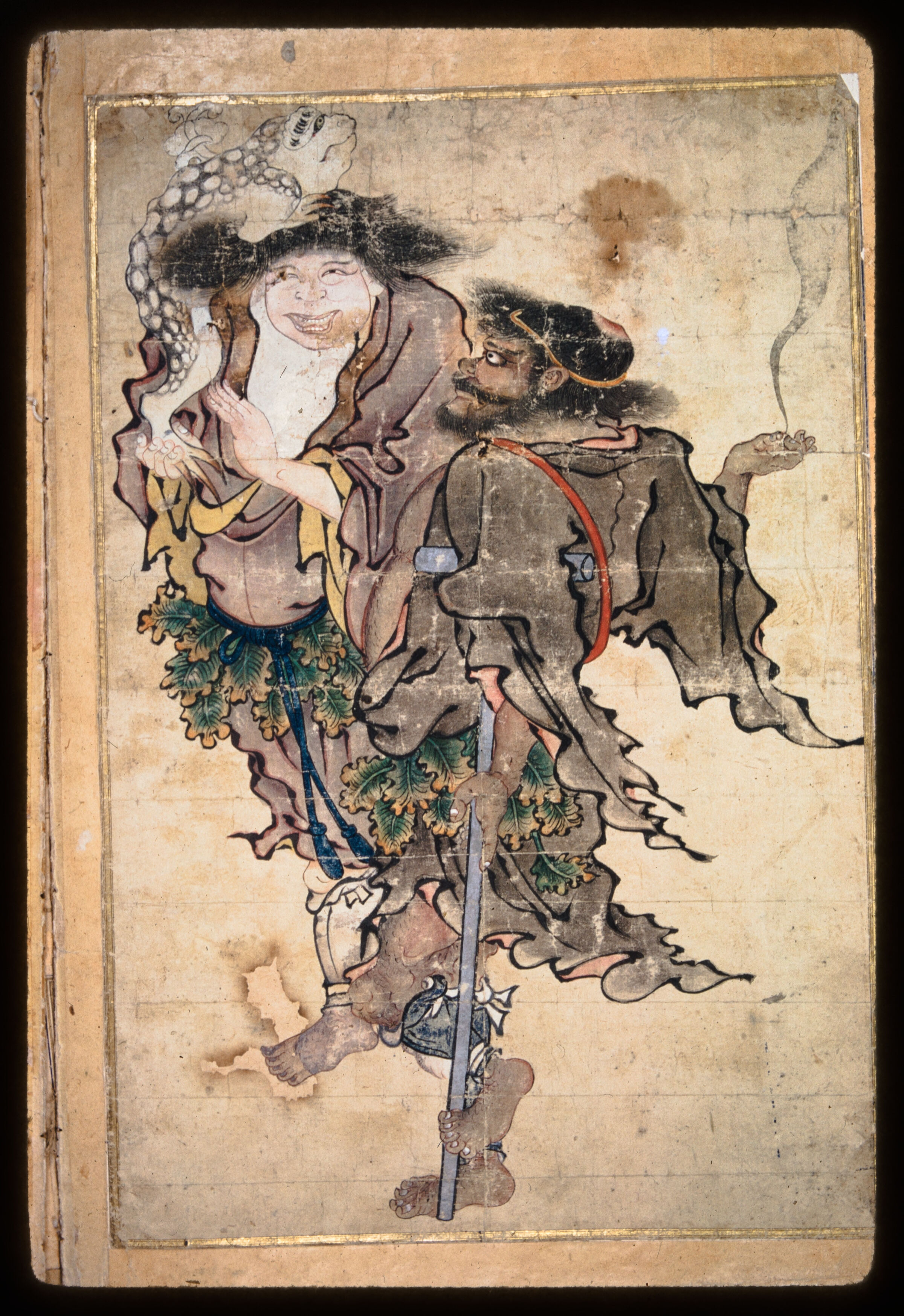
![C016 · Two men walking, one leaning on a staff [desc.]](https://fire-of-life.org/wp-content/uploads/2026/10/C016_TSMK_29a_Two-men-walking-one-leaning-on-a-staff-d.jpg "Topkapı Palace Museum Library, Istanbul")

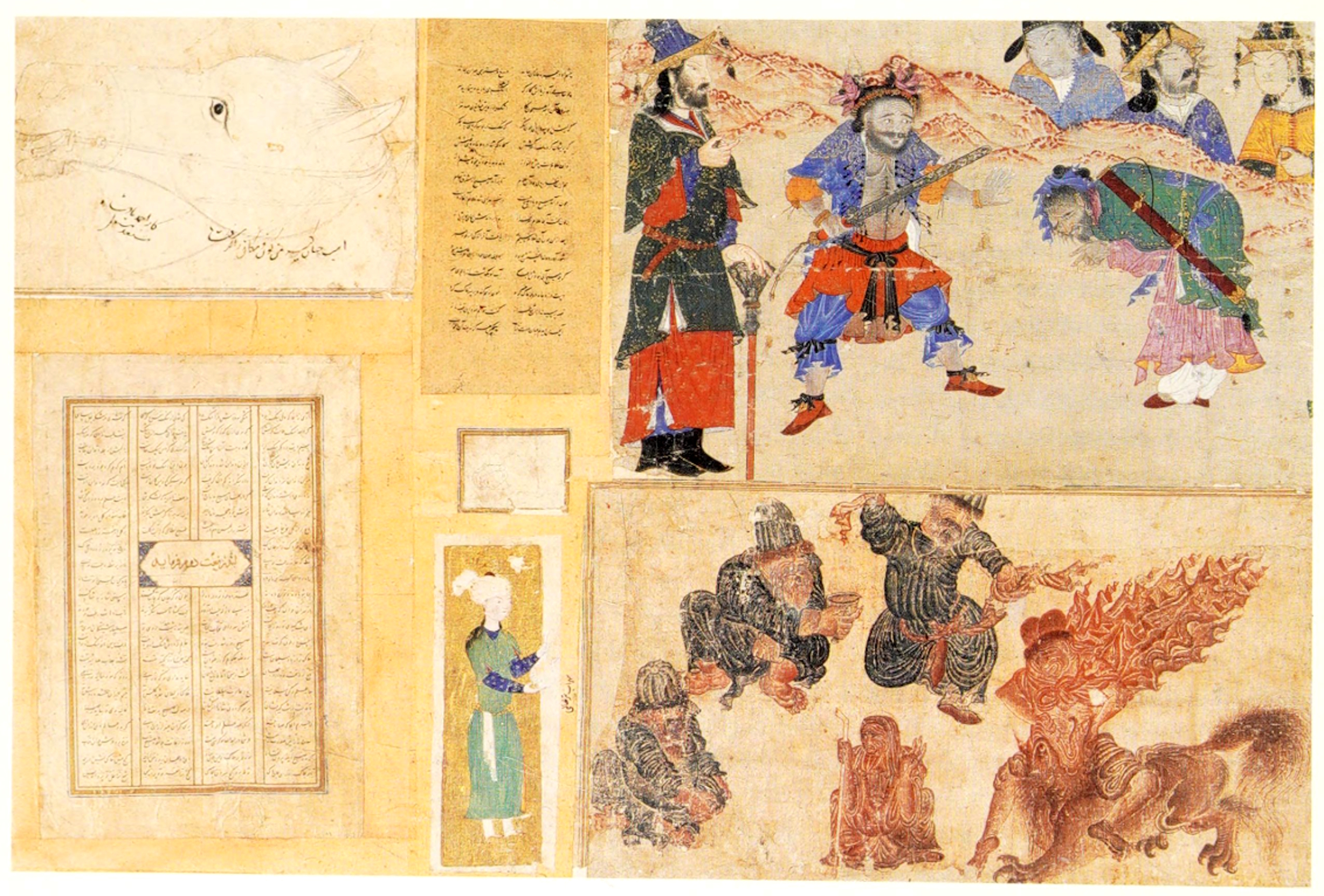
![C019 · Demons with a winged beast [desc.]](https://fire-of-life.org/wp-content/uploads/2026/10/C019_TSMK_29b-29v_Demons-with-a-winged-beast-desc.jpg "Topkapı Palace Museum Library, Istanbul")
![C021 · A giant, bare-chested figure heaving a slab [desc.]](https://fire-of-life.org/wp-content/uploads/2026/10/C021_TSMK_33a_A-giant-bare-chested-figure-heaving-a-sl.jpg "Topkapı Palace Museum Library, Istanbul")

![C023 · Two demons crouching beneath a flying cloth [desc.]](https://fire-of-life.org/wp-content/uploads/2026/10/C023_TSMK_34b-per-Commons-foli_Two-demons-crouching-beneath-a-flying-cl.jpg "Topkapı Palace Museum Library, Istanbul")
![C024 · Flute player under a plum tree, attributed to Shaykhi [desc.]](https://fire-of-life.org/wp-content/uploads/2026/10/C024_TSMK_36a-36r_Flute-player-under-a-plum-tree-attribute.jpg "Topkapı Palace Museum Library, Istanbul")
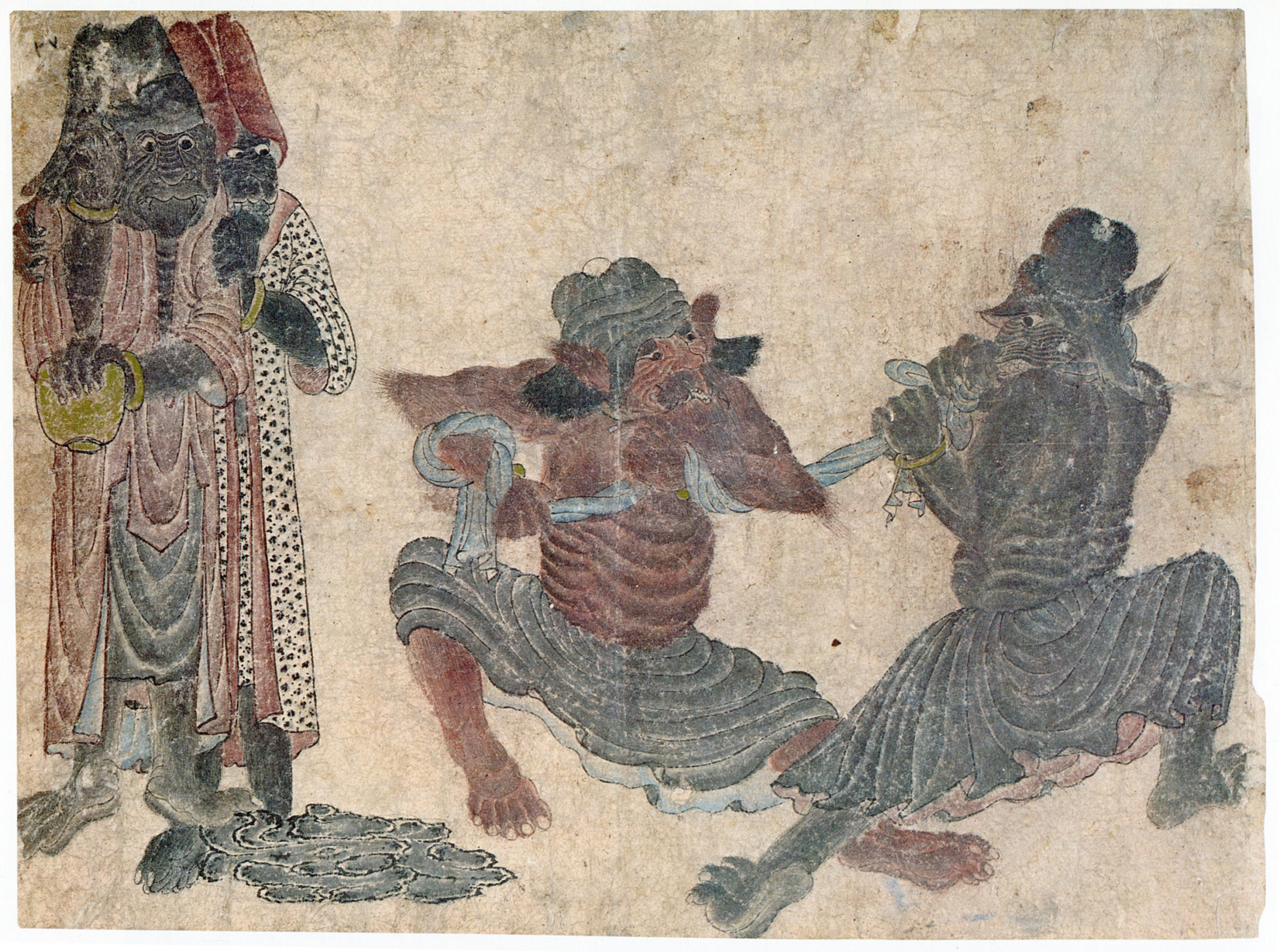
![C027 · Two horned demons grappling [desc.]](https://fire-of-life.org/wp-content/uploads/2026/10/C027_TSMK_37b-1-of-3_Two-horned-demons-grappling-desc.jpg "Topkapı Palace Museum Library, Istanbul")
![C028 · Two seated men, one playing a stringed instrument [desc.]](https://fire-of-life.org/wp-content/uploads/2026/10/C028_TSMK_37b-2-of-3_Two-seated-men-one-playing-a-stringed-in.jpg "Topkapı Palace Museum Library, Istanbul")
![C029 · Two hooded figures standing and a third crouching [desc.]](https://fire-of-life.org/wp-content/uploads/2026/10/C029_TSMK_37b-3-of-3_Two-hooded-figures-standing-and-a-third.jpg "Topkapı Palace Museum Library, Istanbul")
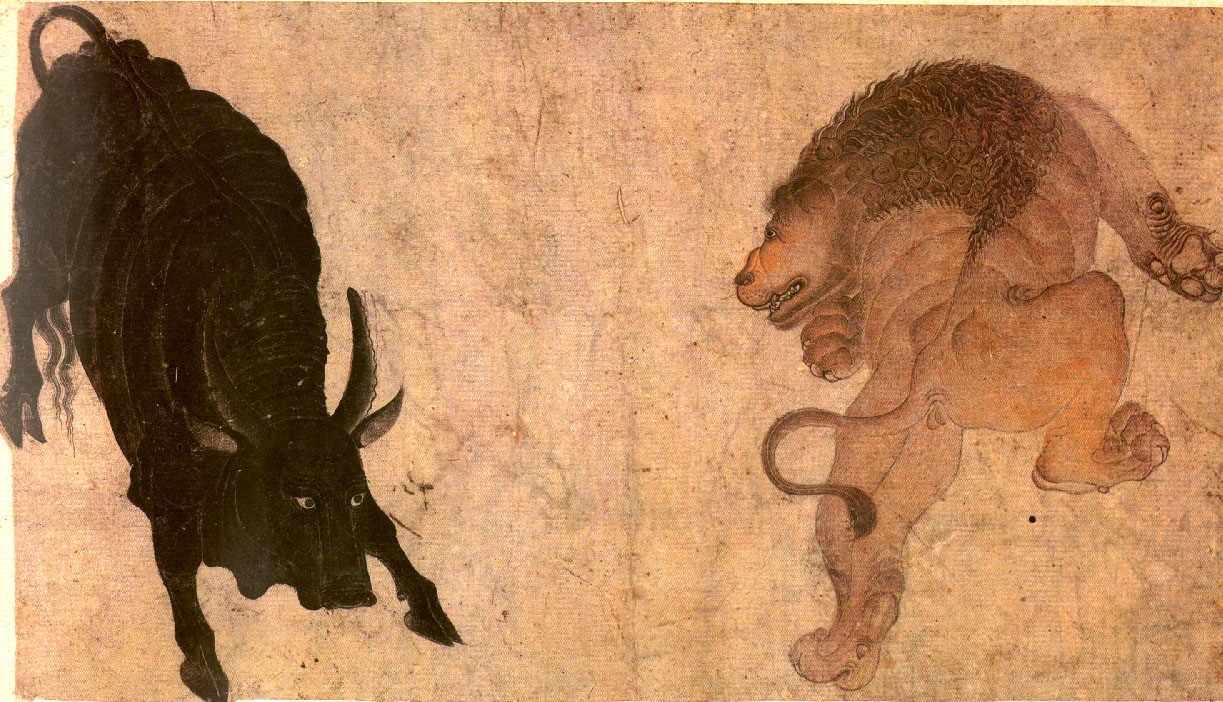
![C031 · Figures with a black, horned ox [desc.]](https://fire-of-life.org/wp-content/uploads/2026/10/C031_TSMK_38a-2-of-4_Figures-with-a-black-horned-ox-desc.jpg "Topkapı Palace Museum Library, Istanbul")
![C032 · Three seated men [desc.]](https://fire-of-life.org/wp-content/uploads/2026/10/C032_TSMK_38a-3-of-4_Three-seated-men-desc.jpg "Topkapı Palace Museum Library, Istanbul")
![C033 · Two seated men, one with a cauldron [desc.]](https://fire-of-life.org/wp-content/uploads/2026/10/C033_TSMK_38a-4-of-4_Two-seated-men-one-with-a-cauldron-desc.jpg "Topkapı Palace Museum Library, Istanbul")

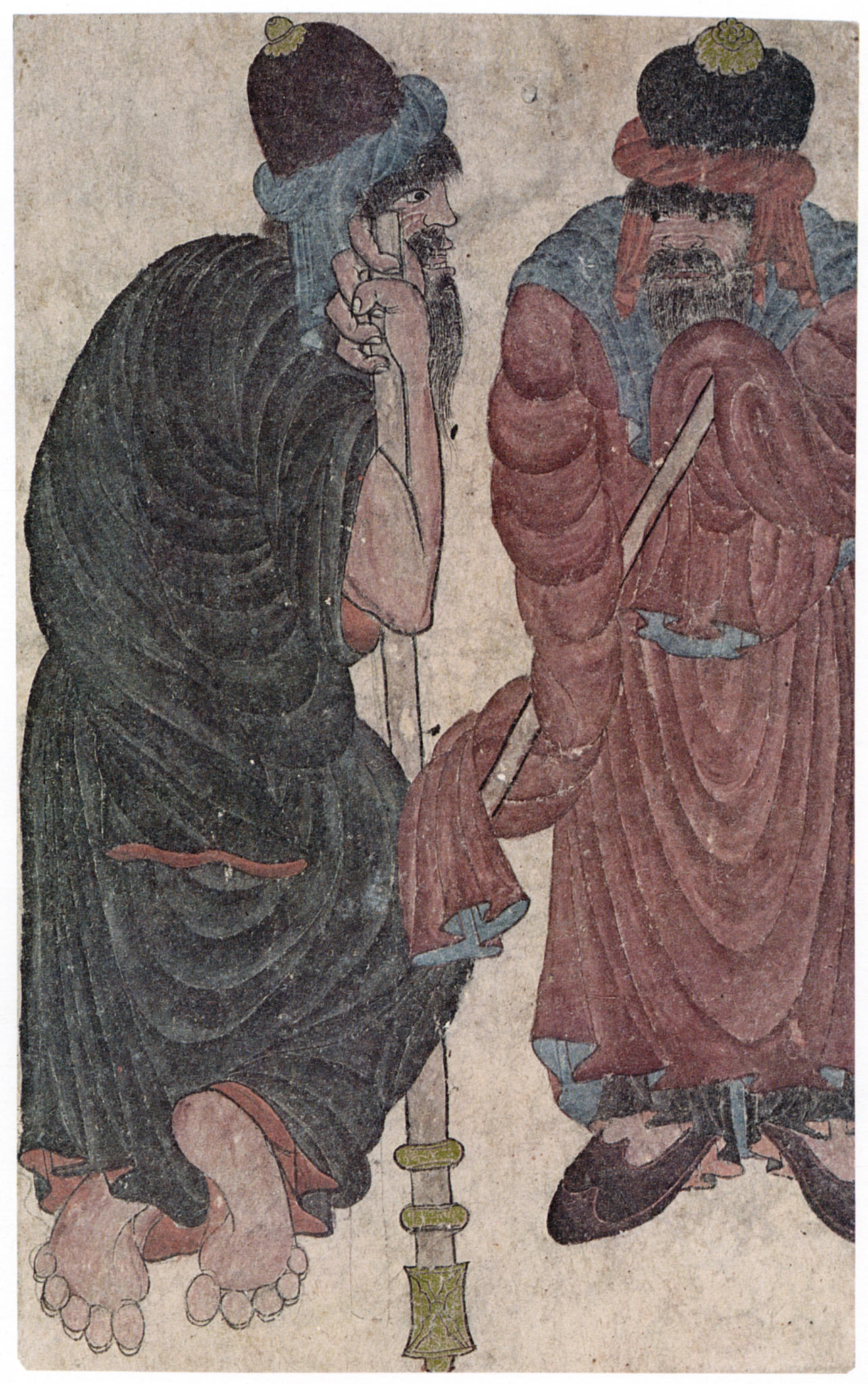
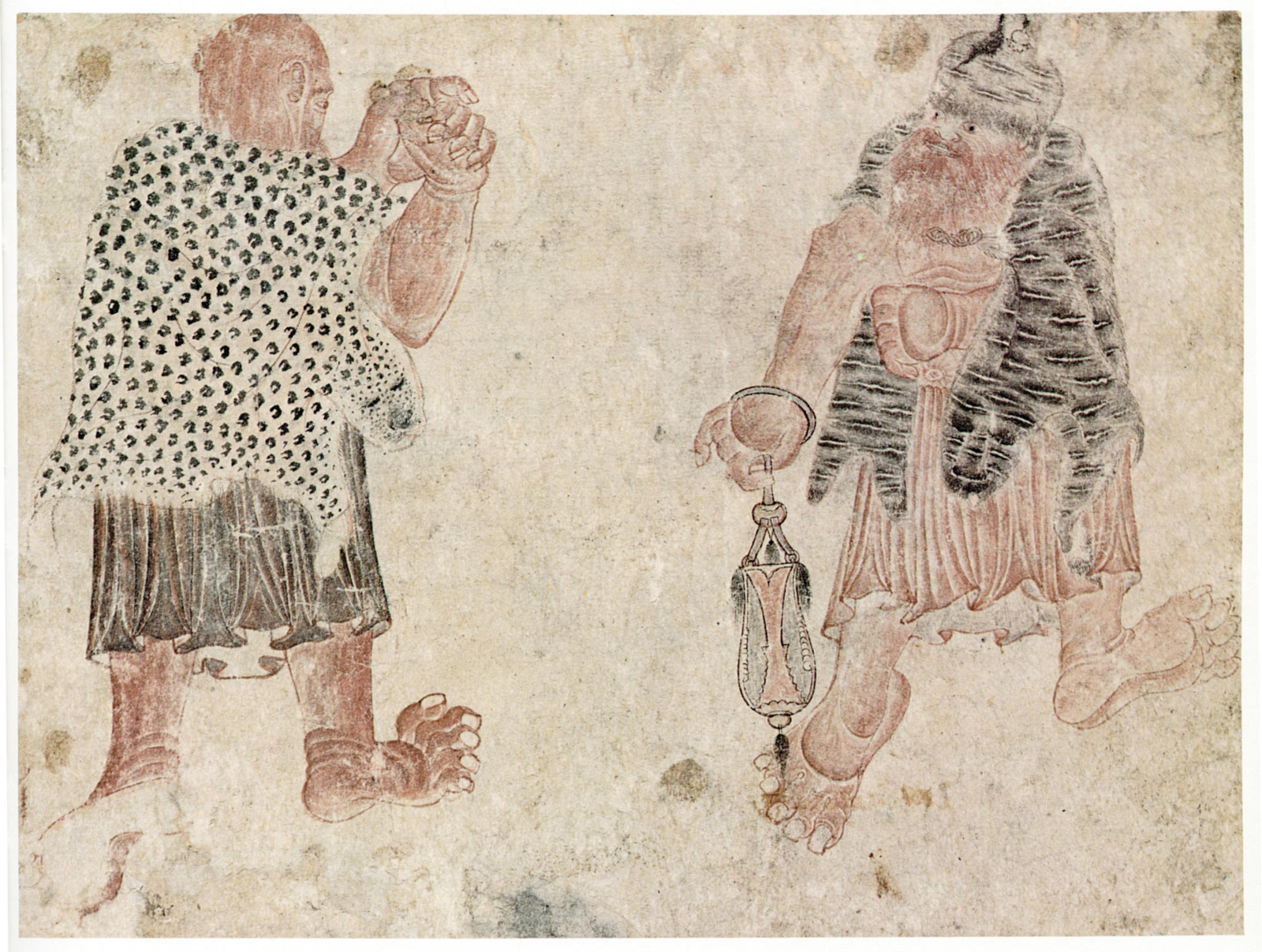
![C037 · Two demons [desc.]](https://fire-of-life.org/wp-content/uploads/2026/10/C037_TSMK_39b_Two-demons-desc.jpg "Topkapı Palace Museum Library, Istanbul")

![C040 · A horned demon [desc.]](https://fire-of-life.org/wp-content/uploads/2026/10/C040-a_TSMK_48a-Lei-Gokkaya-48b_A-horned-demon-desc.jpg "Topkapı Palace Museum Library, Istanbul")
![C040 · A horned demon [desc.]](https://fire-of-life.org/wp-content/uploads/2026/10/C040-b_TSMK_48a-Lei-Gokkaya-48b_A-horned-demon-desc.jpg "Topkapı Palace Museum Library, Istanbul")
![C041 · Two seated, hooded figures [desc.]](https://fire-of-life.org/wp-content/uploads/2026/10/C041_TSMK_52a_Two-seated-hooded-figures-desc.jpg "Topkapı Palace Museum Library, Istanbul")

![C043 · A man with a camel [desc.]](https://fire-of-life.org/wp-content/uploads/2026/10/C043_TSMK_54a_A-man-with-a-camel-desc.jpg "Topkapı Palace Museum Library, Istanbul")

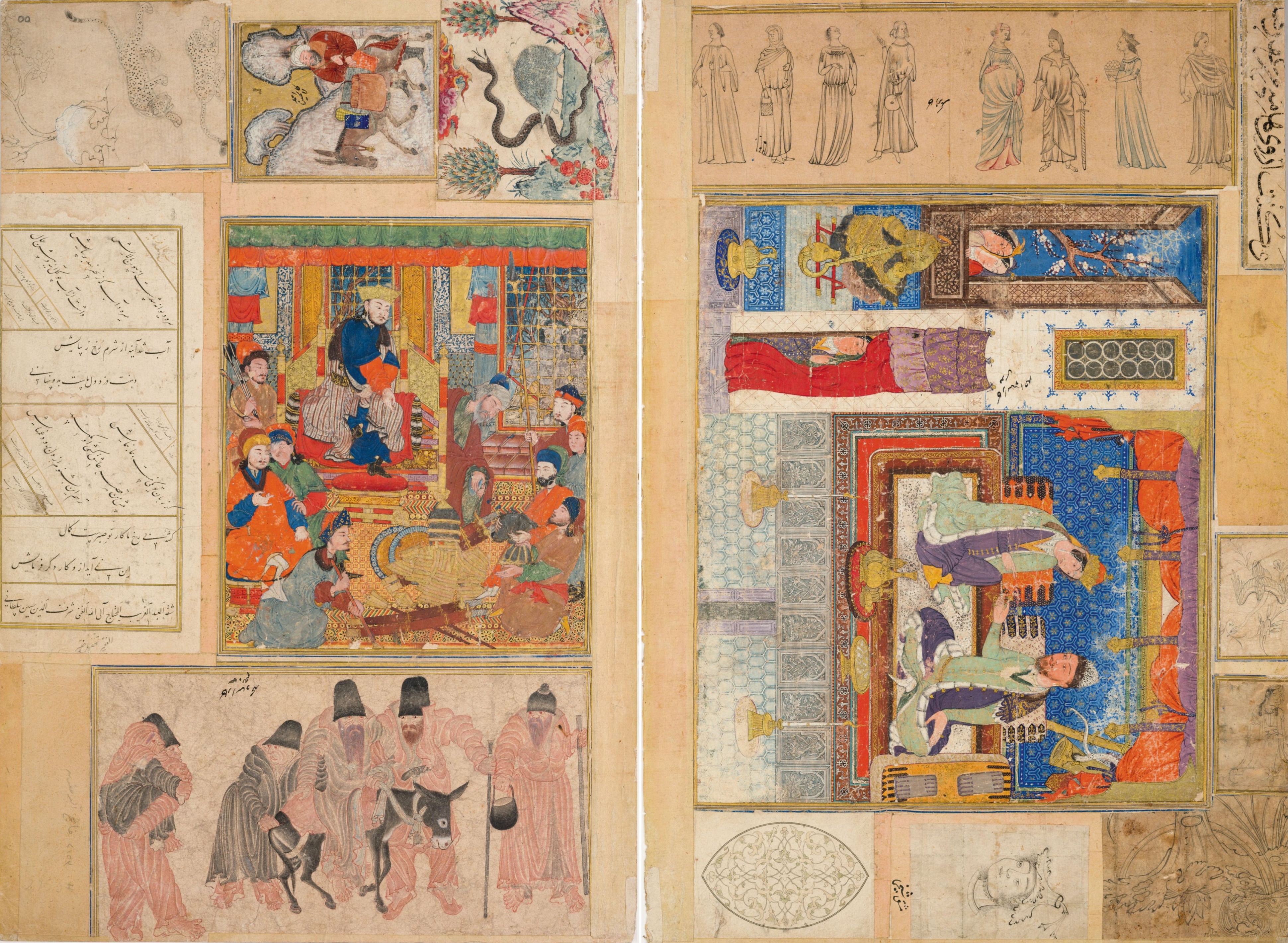


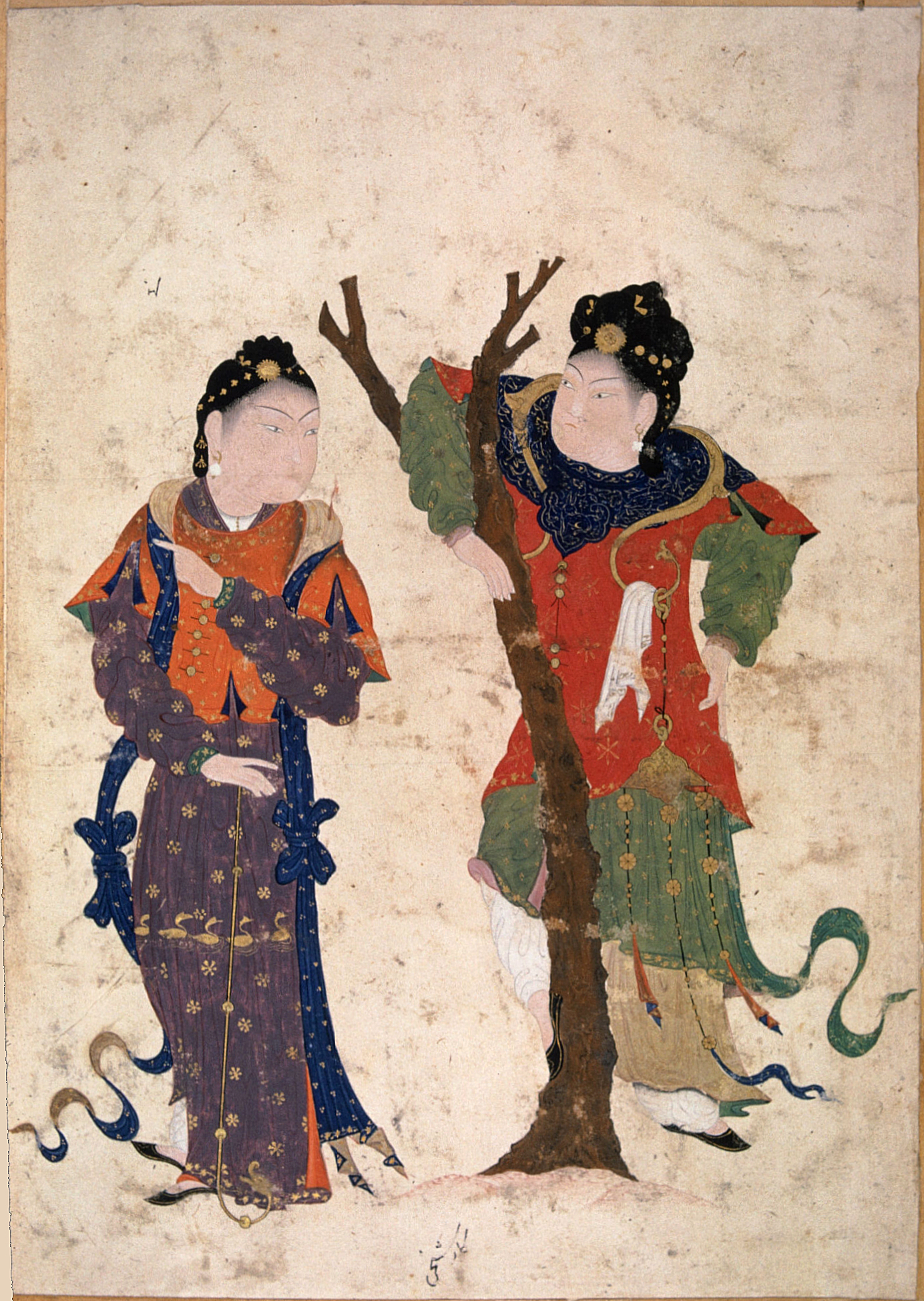

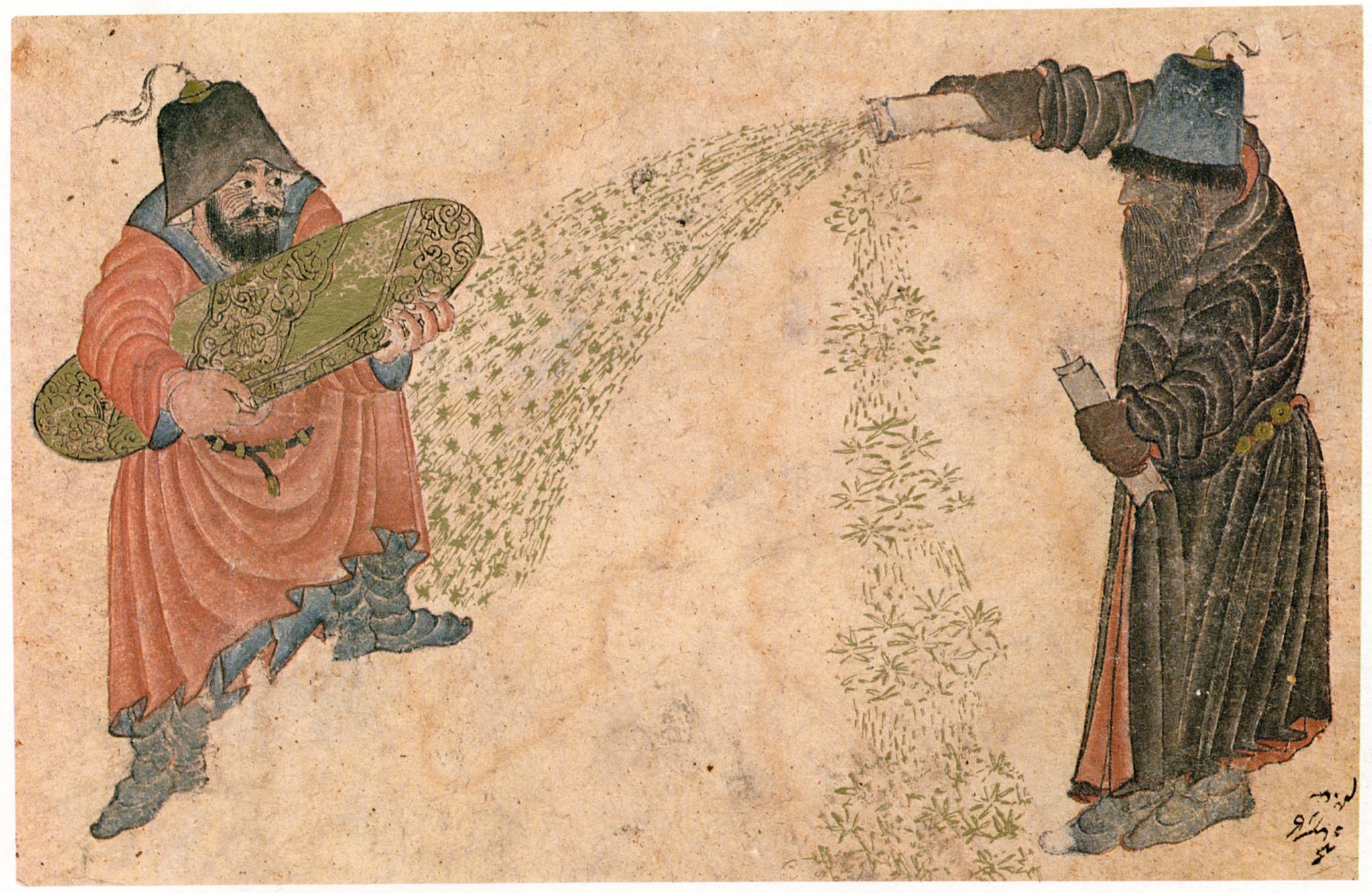

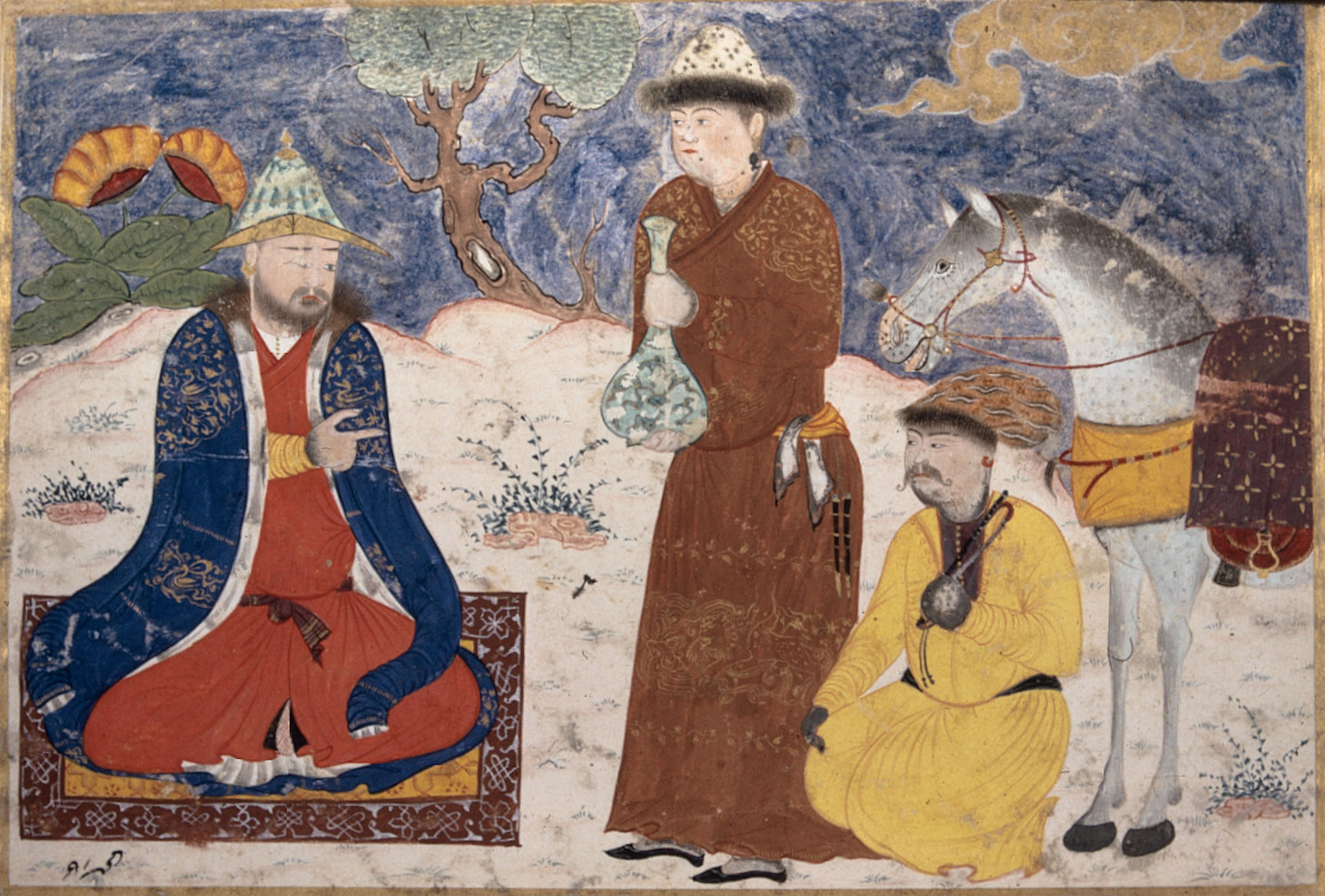
![C055 · Two men by a tree, one holding a rope, the other a small hanging vessel [desc.]](https://fire-of-life.org/wp-content/uploads/2026/10/C055_TSMK_73b_Two-men-by-a-tree-one-holding-a-rope-the.jpg "Topkapı Palace Museum Library, Istanbul")



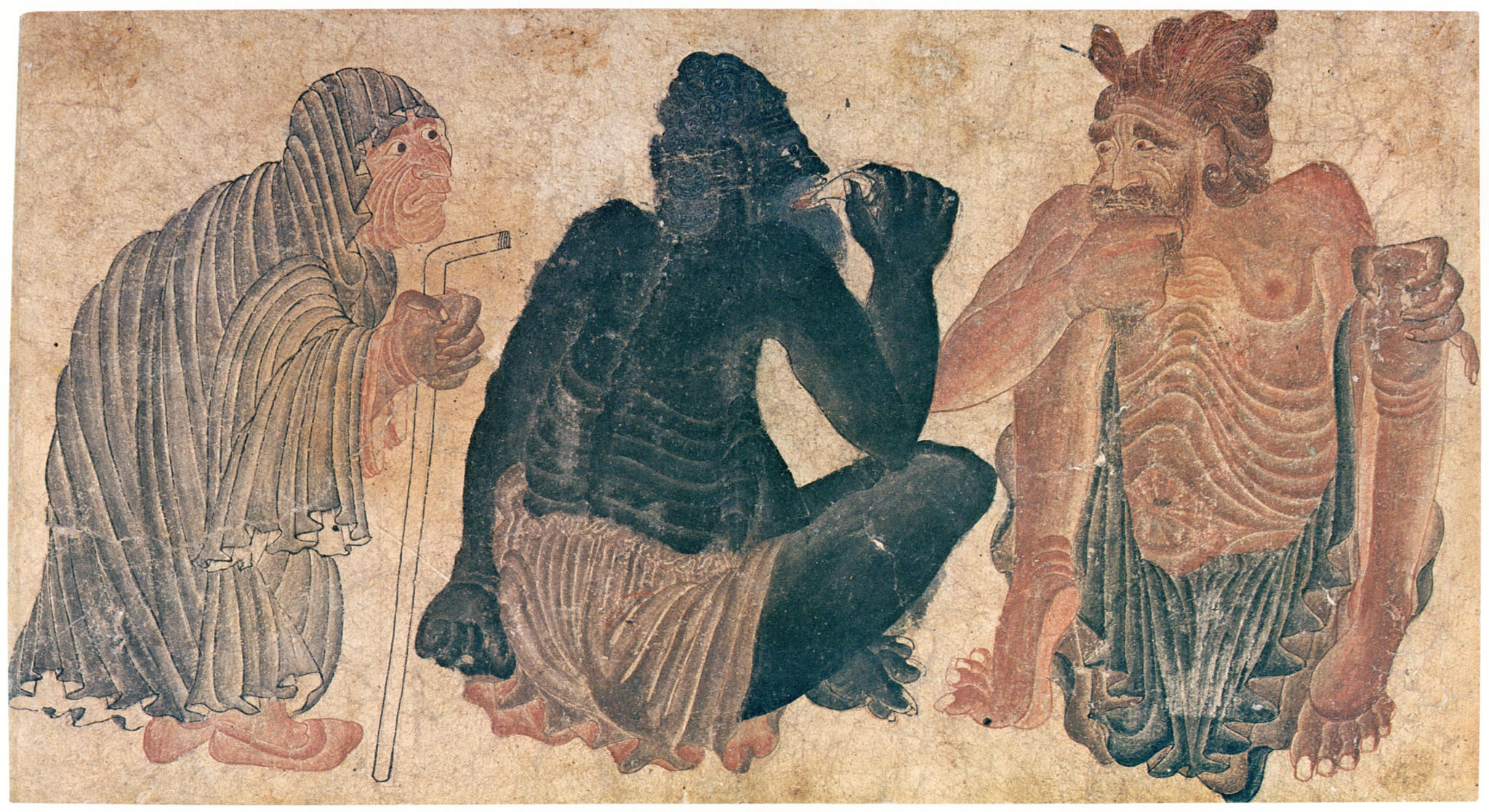
![C063 · Three figures [desc.]](https://fire-of-life.org/wp-content/uploads/2026/10/C063_TSMK_92b_Three-figures-desc.jpg "Topkapı Palace Museum Library, Istanbul")
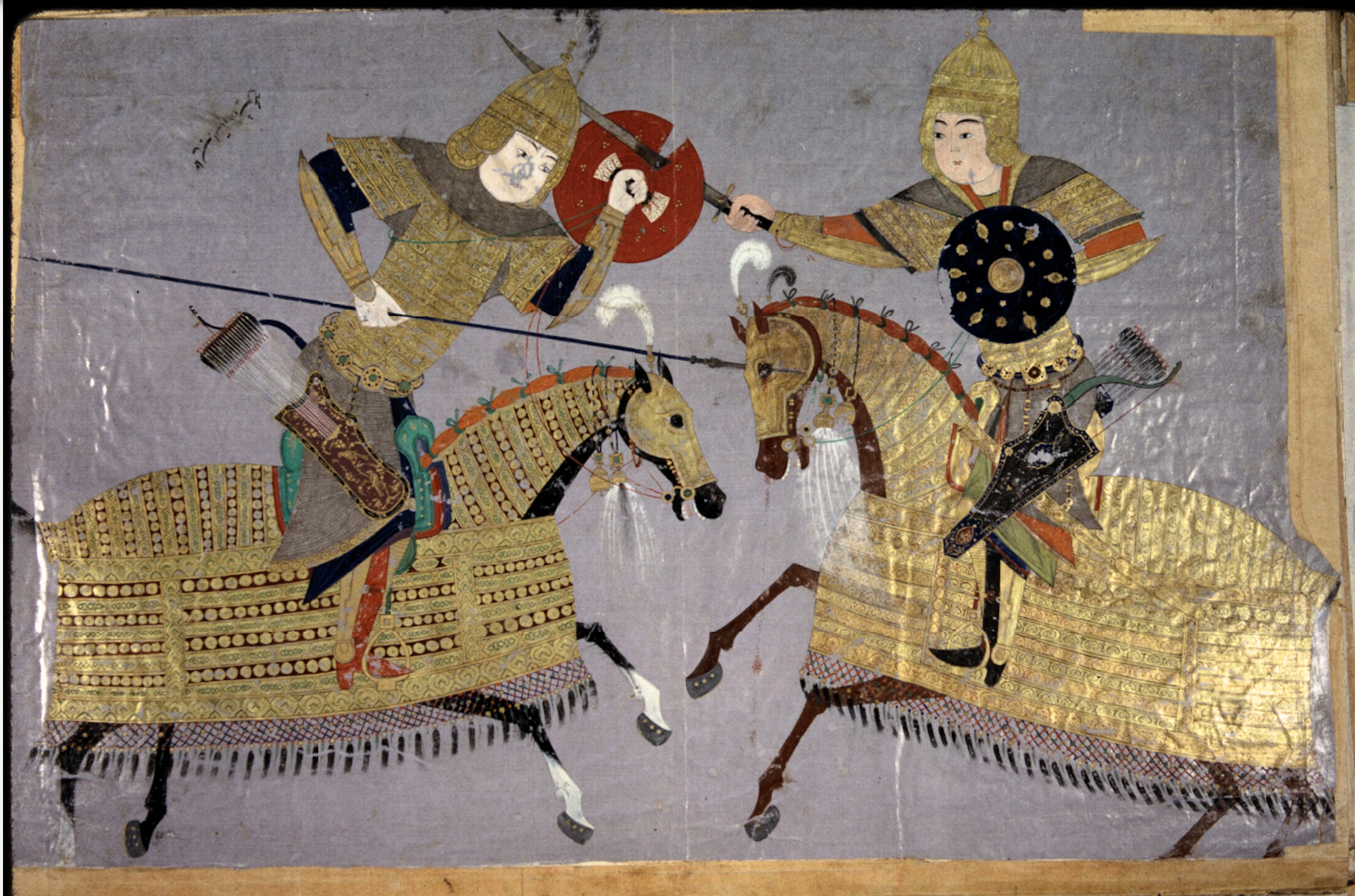
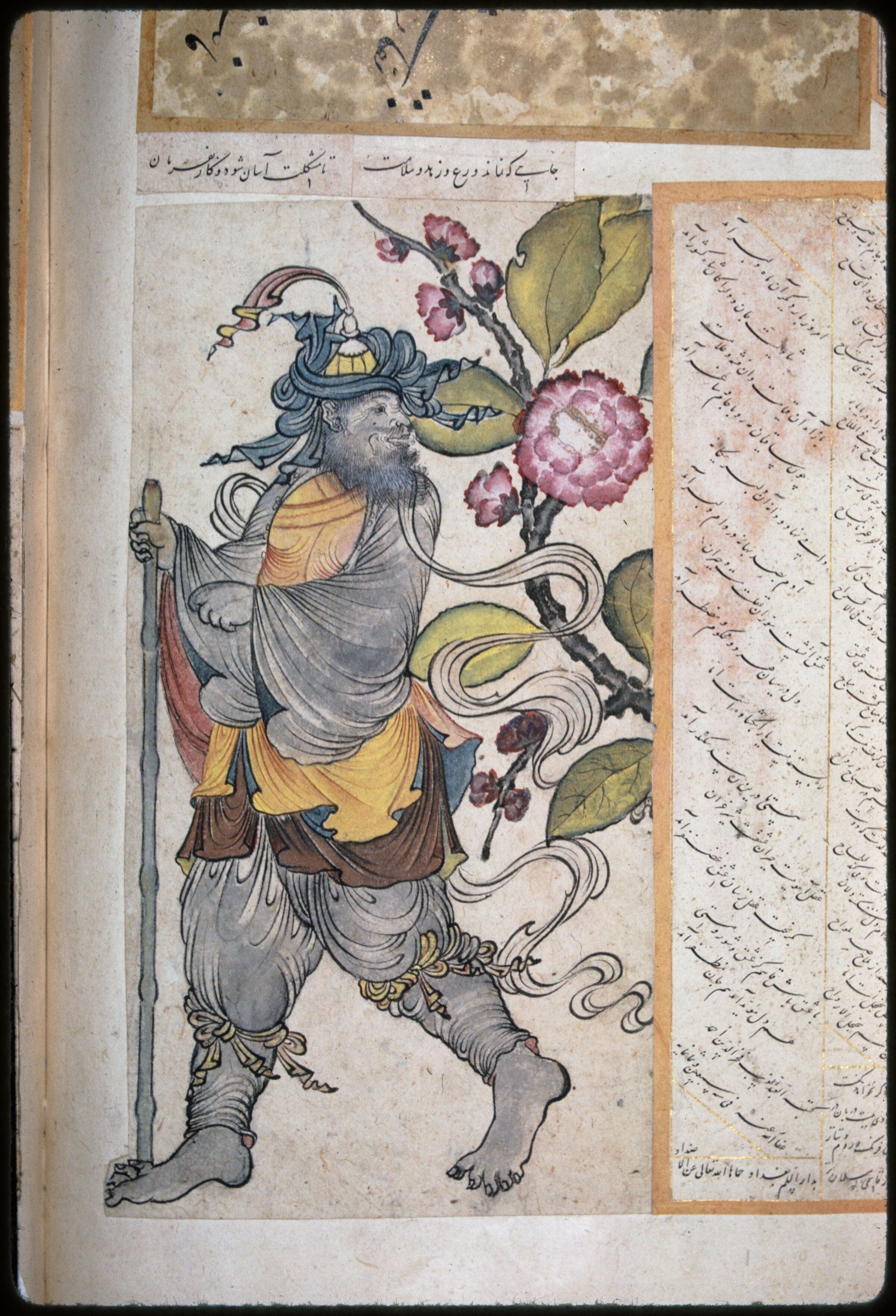
![C065 · A dark, hairy figure striding [desc.]](https://fire-of-life.org/wp-content/uploads/2026/10/C065_TSMK_101a-1-of-2_A-dark-hairy-figure-striding-desc.jpg "Topkapı Palace Museum Library, Istanbul")
![C068 · Two men [desc.]](https://fire-of-life.org/wp-content/uploads/2026/10/C068_TSMK_105a_Two-men-desc.jpg "Topkapı Palace Museum Library, Istanbul")
![C069 · Two old men in long cloaks, one with a staff [desc.]](https://fire-of-life.org/wp-content/uploads/2026/10/C069_TSMK_106b_Two-old-men-in-long-cloaks-one-with-a-st.jpg "Topkapı Palace Museum Library, Istanbul")
![C071 · Three demons [desc.]](https://fire-of-life.org/wp-content/uploads/2026/10/C071_TSMK_112a_Three-demons-desc.jpg "Topkapı Palace Museum Library, Istanbul")


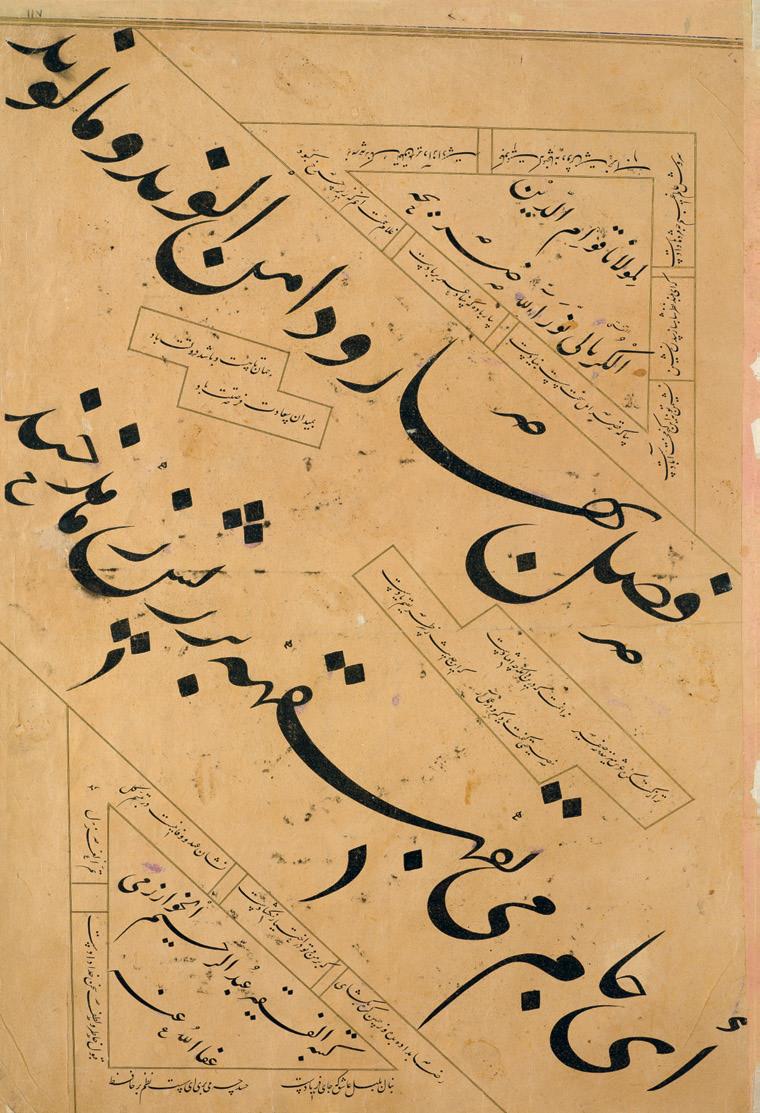

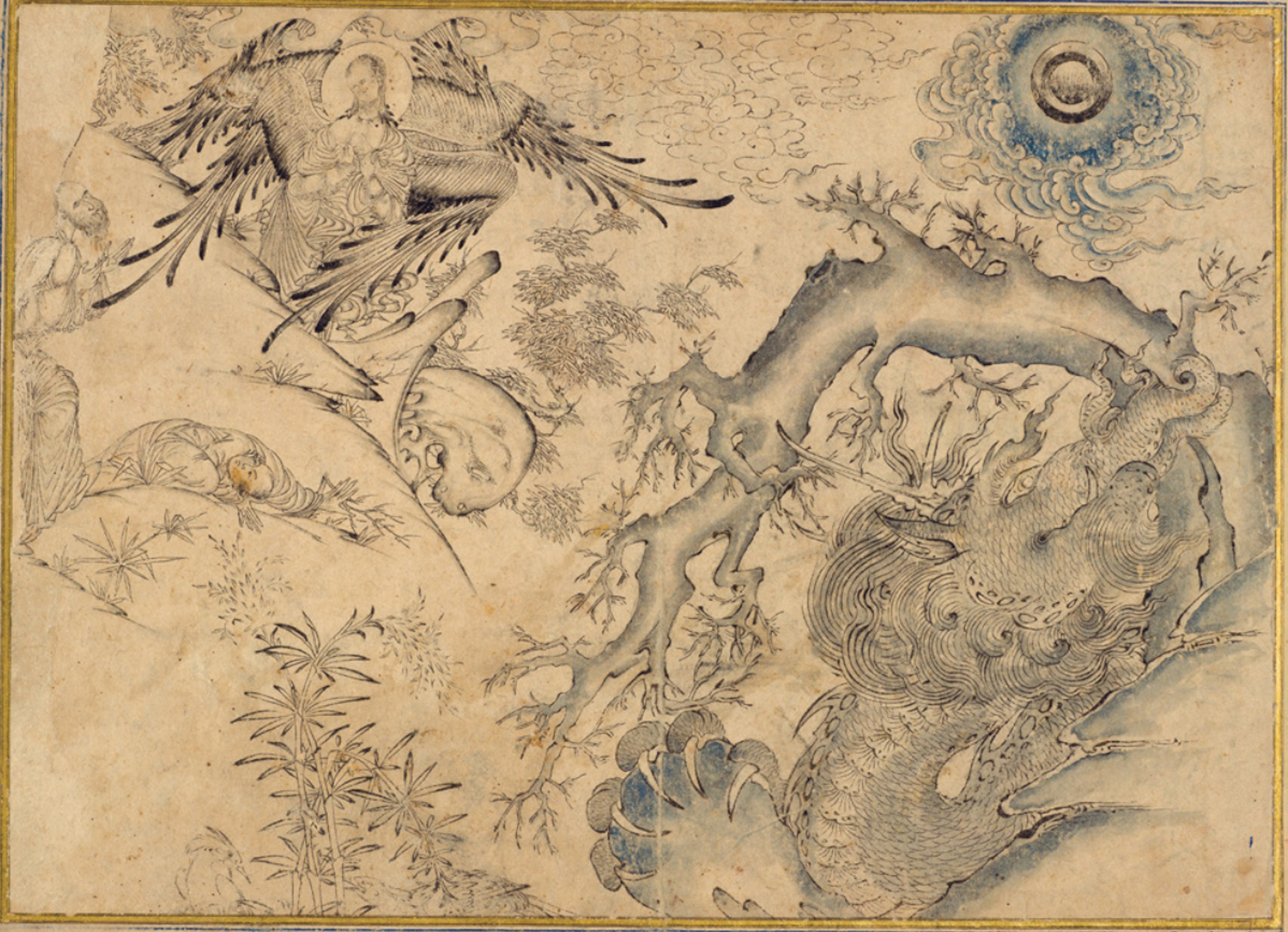
![C080 · Two seated demons, one with a mace [desc.]](https://fire-of-life.org/wp-content/uploads/2026/10/C080_TSMK_128a_Two-seated-demons-one-with-a-mace-desc.jpg "Topkapı Palace Museum Library, Istanbul")
![C081 · A horned figure carrying a man on his back [desc.]](https://fire-of-life.org/wp-content/uploads/2026/10/C081_TSMK_129b-1-of-2_A-horned-figure-carrying-a-man-on-his-ba.jpg "Topkapı Palace Museum Library, Istanbul")
![C082 · Two half-clad old men talking [desc.]](https://fire-of-life.org/wp-content/uploads/2026/10/C082_TSMK_129b-2-of-2_Two-half-clad-old-men-talking-desc.jpg "Topkapı Palace Museum Library, Istanbul")

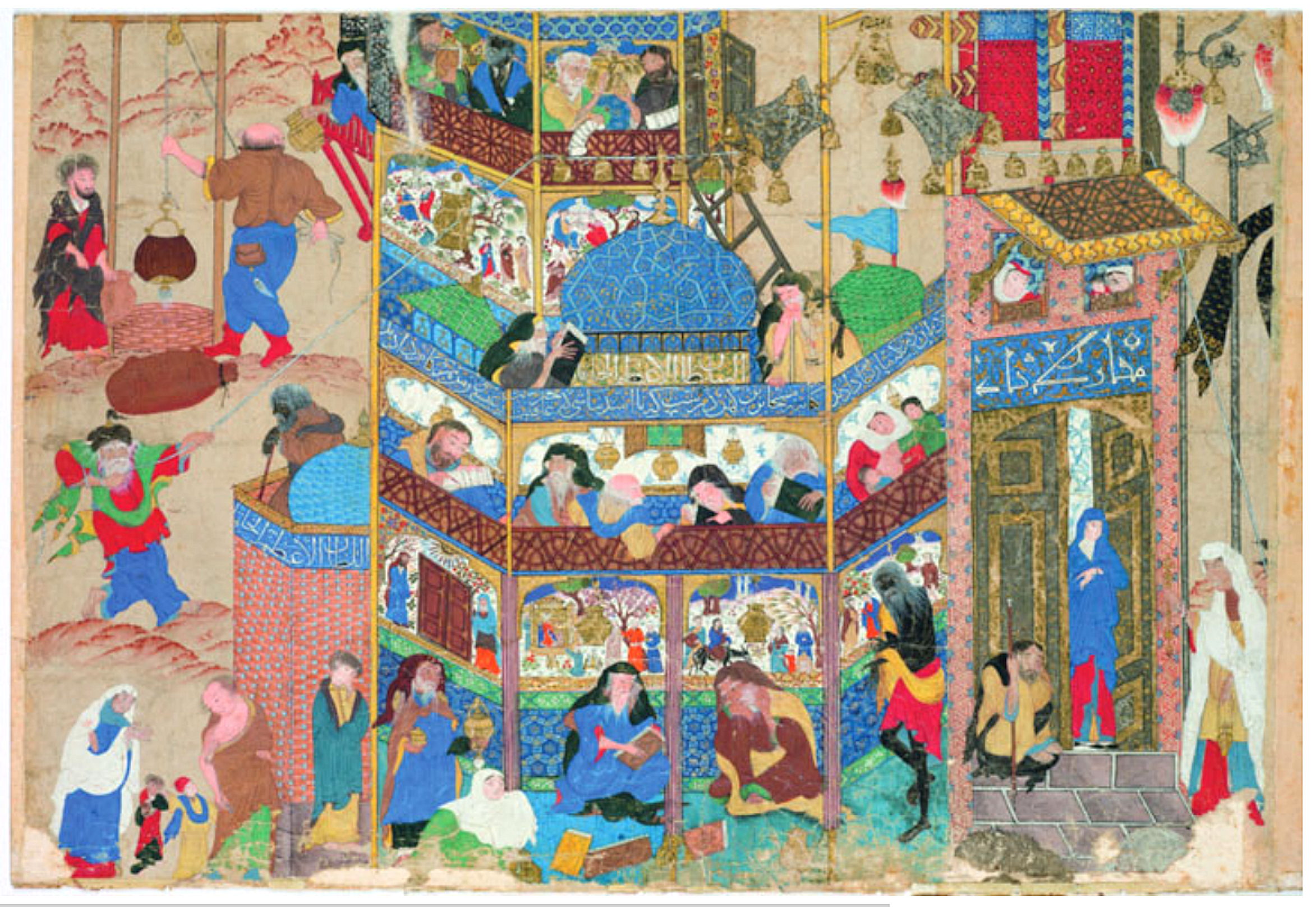

![C090 · Two demons at work on a tree trunk [desc.]](https://fire-of-life.org/wp-content/uploads/2026/10/C090_TSMK_141a_Two-demons-at-work-on-a-tree-trunk-desc.jpg "Topkapı Palace Museum Library, Istanbul")
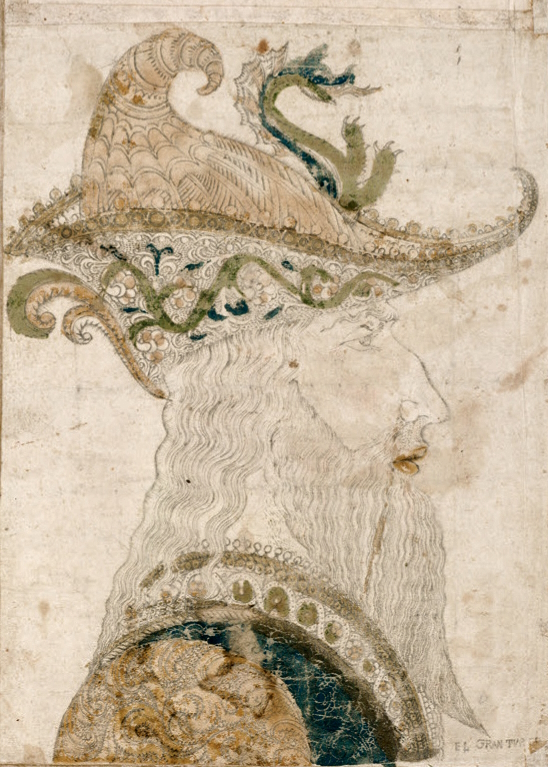


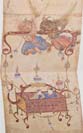
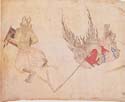





![C117 · Demon on a ruled ground (Negareh no. 16) [desc.]](https://fire-of-life.org/wp-content/uploads/2026/10/C117_TSMK_folio-not-identified_Demon-on-a-ruled-ground-Negareh-no-16-de.jpg "Topkapı Palace Museum Library, Istanbul")
![C121 · Three men around a potted plant [desc.]](https://fire-of-life.org/wp-content/uploads/2026/10/C121_TSMK_10a_Three-men-around-a-potted-plant-desc.jpg "Topkapı Palace Museum Library, Istanbul")
![C122 · Two men with a loaded donkey [desc.]](https://fire-of-life.org/wp-content/uploads/2026/10/C122_TSMK_14a_Two-men-with-a-loaded-donkey-desc.jpg "Topkapı Palace Museum Library, Istanbul")


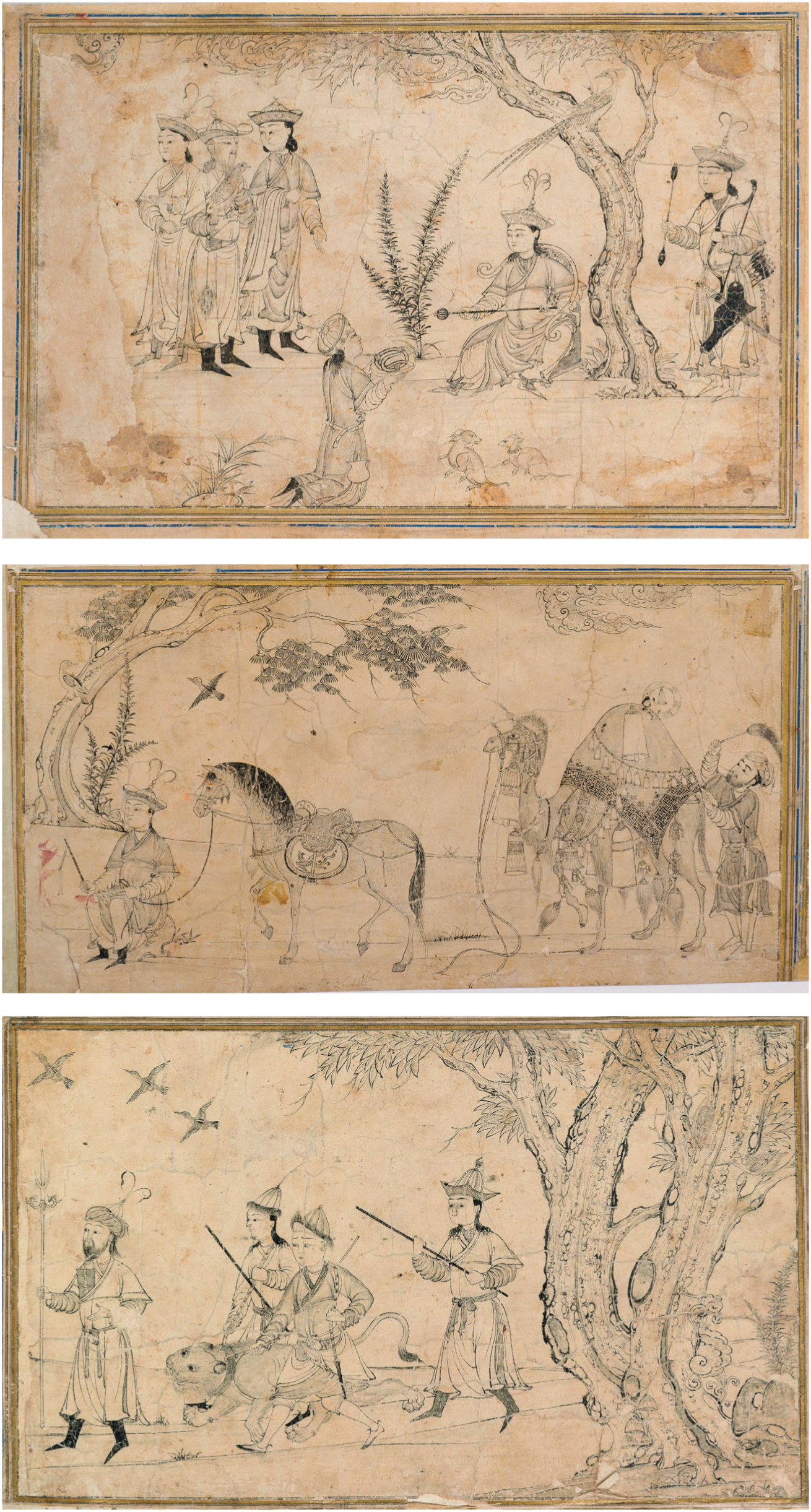
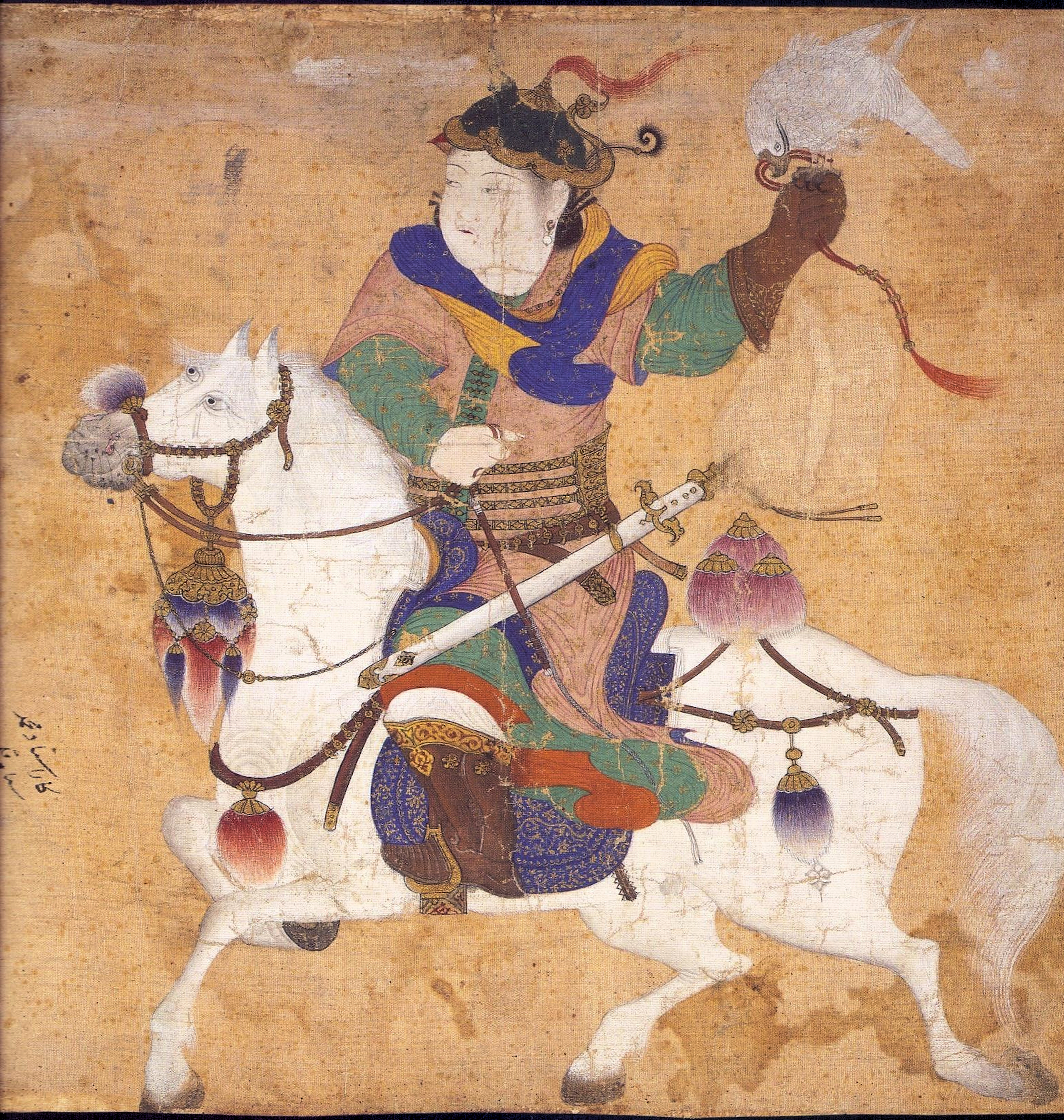
![C131 · Mounted hunters with falcons and a spotted cheetah [desc.]](https://fire-of-life.org/wp-content/uploads/2026/10/C131_TSMK_84a_Mounted-hunters-with-falcons-and-a-spott.jpg "Topkapı Palace Museum Library, Istanbul")
![C132 · Two figures, one dark-skinned in a red hood [desc.]](https://fire-of-life.org/wp-content/uploads/2026/10/C132_TSMK_89a_Two-figures-one-dark-skinned-in-a-red-ho.jpg "Topkapı Palace Museum Library, Istanbul")
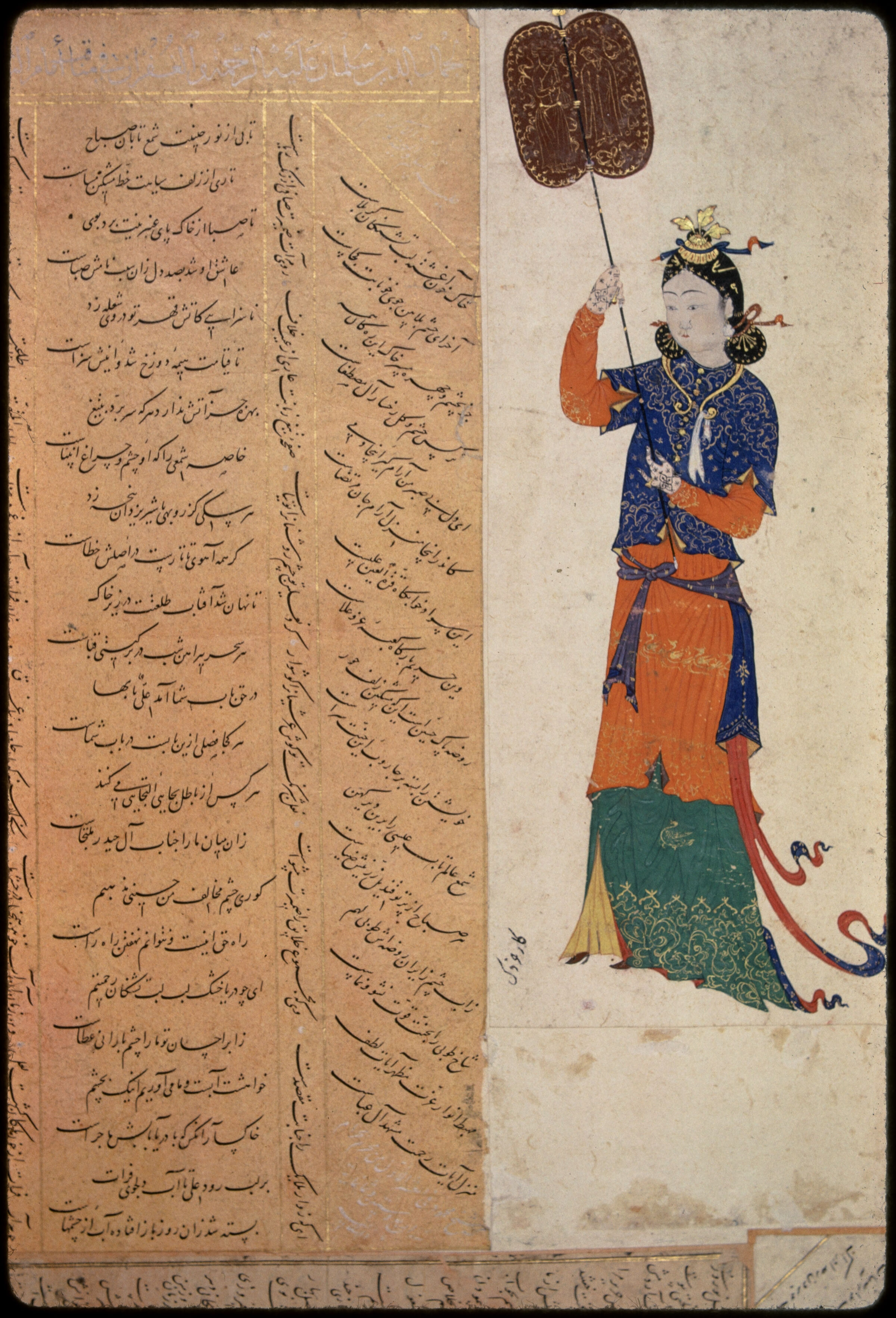

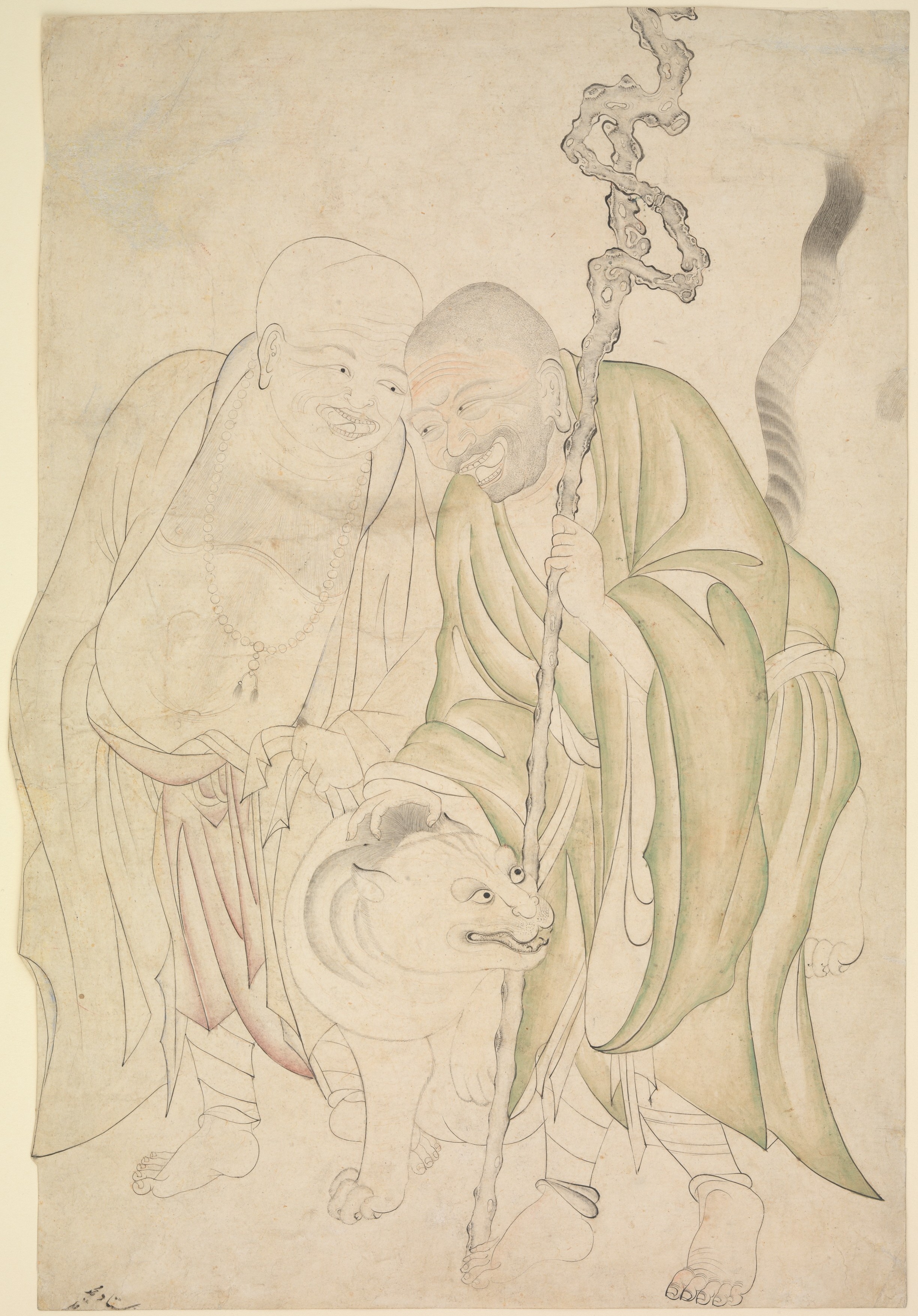

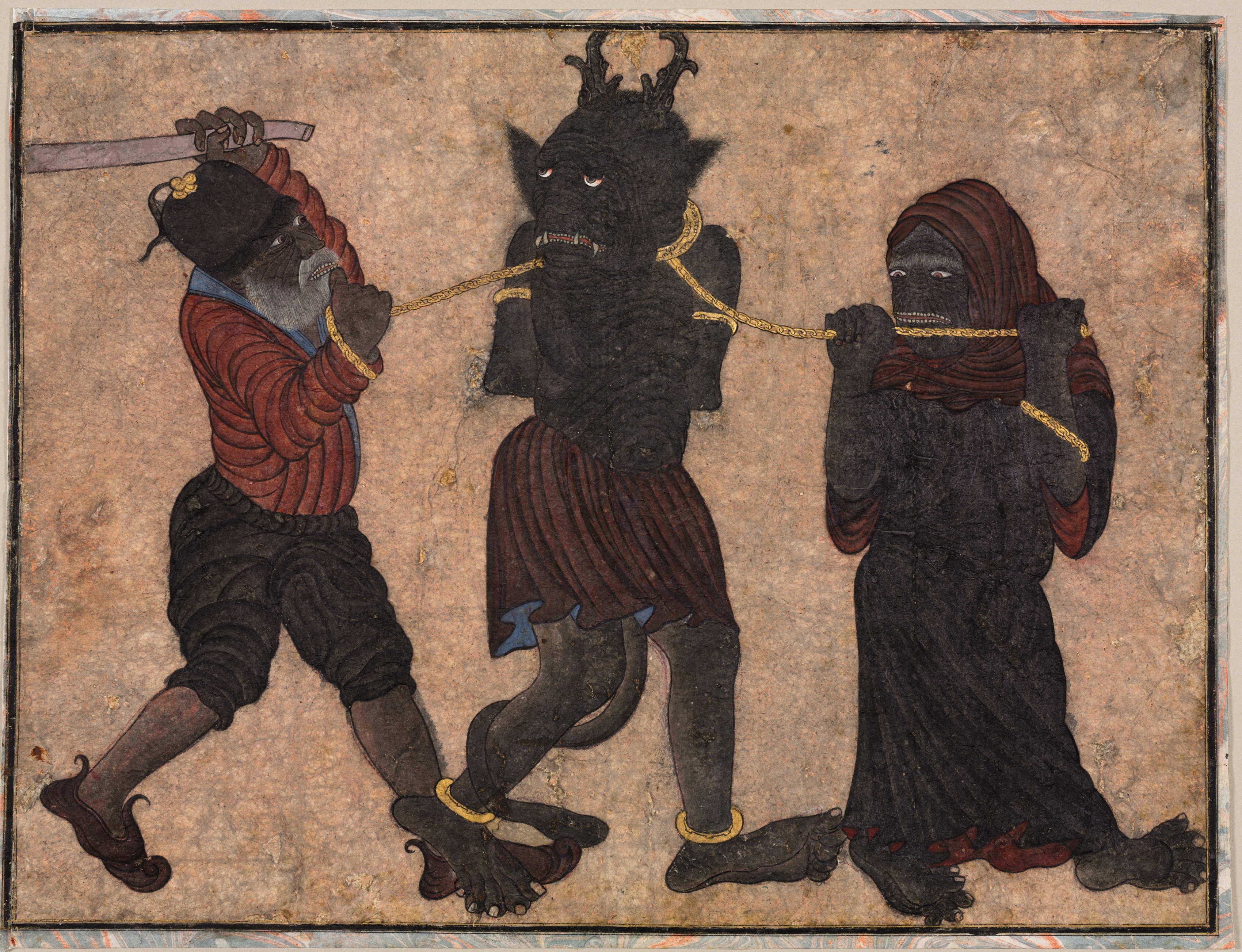

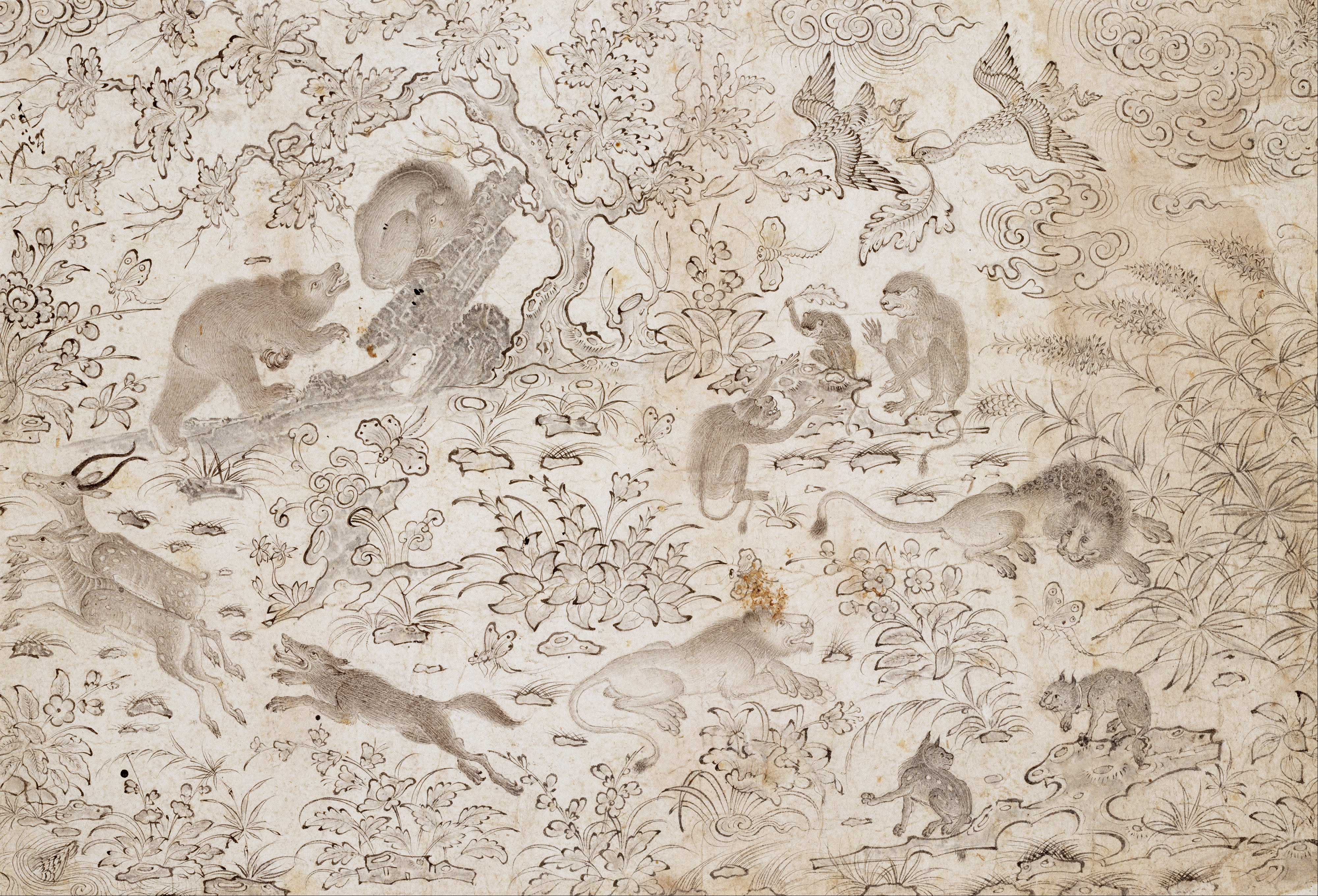
![C154 · Animals in a flowering landscape (upper sheet of "Siyah Qalam Folio 8 Recto") [desc.]](https://fire-of-life.org/wp-content/uploads/2026/10/C154_NS_not-stated_Animals-in-a-flowering-landscape-upper-s.jpg "Holder not stated (Commons files without collection data)")
![C155 · Spotted canines (wolves or hyenas) (lower sheet of "Siyah Qalam Folio 8 Recto") [desc.]](https://fire-of-life.org/wp-content/uploads/2026/10/C155_NS_not-stated_Spotted-canines-wolves-or-hyenas-lower-s.jpg "Holder not stated (Commons files without collection data)")


For the external references and the licensing of each picture, see sources and licences.