
Index of English Translations of Sumerian Clay Tablets
Sumerian clay tablets that, as far as we could check, had no published English translation. We translate them ourselves. The page linked above is the index of the series. A new tablet is a new row there, not a list copied into every story.
All translations are new and unofficial, made from transliterations on the Cuneiform Digital Library Initiative (CDLI), and may contain errors. Tablet images are credited to the holding institutions and CDLI. Dates use the conventional middle chronology and are approximate.
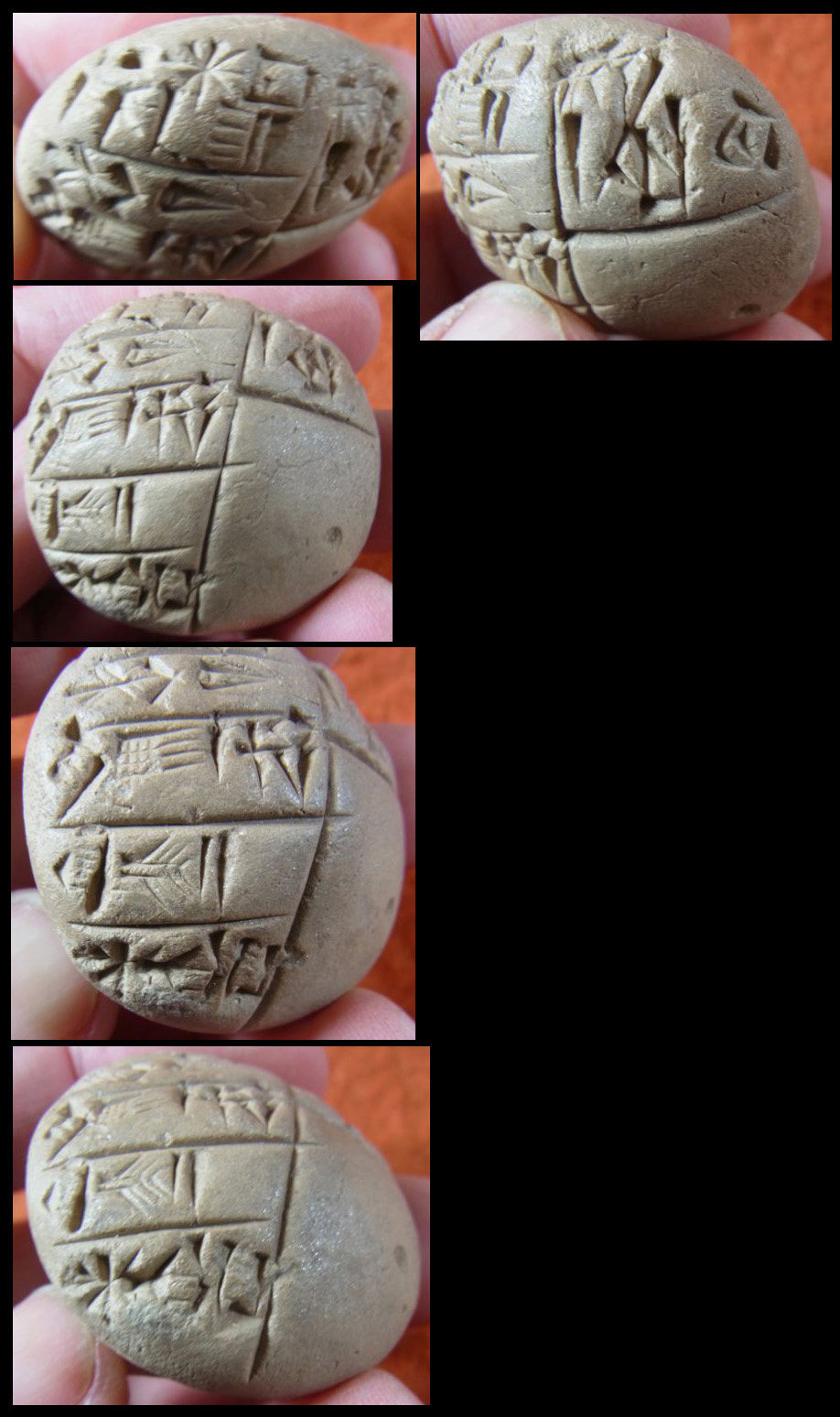
“He is a runaway slave.”
Six lines, Old Akkadian period. A name, a guarantor, a release, and then the label that ends the text.
CDLI places the tablet at Umma, in what is now southern Iraq. It belongs to the Old Akkadian period, roughly 2340 to 2200 BC, centuries before the Ur III archive that fills most of this series. It has no year name.
What can be read
The first line gives a name that is hard to fix; we read it cautiously as Dingir-gabe (or similar). Then: “his name; Nigar-mud (is) the guarantor (šu du8-a); he was released (an-na-tak4?). He is a runaway slave (ARAD2 zah3-kam).”
Guarantor and runaway are the two clearest words. Šu du8-a is the ordinary term for a person who stands surety. ARAD2 zah3-kam is “he is a fled slave”, with the Old Akkadian copula -kam.
What is unsure
The first name’s reading is uncertain, and so is the exact form of the release verb. We do not know who was released, or who stood surety for whom. The tablet is short enough that every broken or doubtful sign matters.
What the tablet doesn’t tell us
We don’t know the runaway’s own name for certain.
We don’t know whether the guarantor was freeing him, reclaiming him, or answering for him in court.
We don’t know the date within the Old Akkadian period.
And we don’t know where the tablet was found; CDLI lists it as Umma on internal grounds.
Before Ur III
Most tablets in this series come from the Ur III state, around 2100 to 2000 BC. This one is older. The same two ideas already sit together on clay: a man who has fled slavery, and another man who guarantees. The paperwork is smaller; the problem is not new.
Here we are speculating, but the need for a guarantor suggests the runaway had re-entered someone’s household or custody under conditions. The tablet says only that a guarantor is named, and that the man is a runaway slave.
The tablet in full (our translation)
Front (col. i): Dingir-gabe (?); his name; Nigar-mud, the guarantor; he was released (?).
Front (col. ii): He is a runaway slave.
Back: (blank).
How we read it
Key lines in transliteration: nigar-mud szu du8-a, “Nigar-mud, the guarantor”; an-na-tak4?, possibly “he was released”; and ARAD2 zah3-kam, “he is a runaway slave”.
Uncertain: the first personal name; the exact reading of the release verb; and the legal relation between the guarantor and the runaway.
Our confidence: low-medium. The words “guarantor” and “runaway slave” are clear; the rest of the little text is not.
This translation is new and unofficial, made from the CDLI transliteration, and may contain errors. “Untranslated” means we found no translation on CDLI or in the tablet’s publication history (unpublished on CDLI (no primary publication listed)). Dates use the conventional middle chronology and are approximate.
For the full description of sources, method, uncertainties, dating conventions, limitations, and how to report corrections, see About the Translations and Methodology.