
Index of translations of Sumerian tablets
Sumerian clay tablets that, as far as we could check, had no published English translation. We translate them ourselves. The page linked above is the index of the series. A new tablet is a new row there, not a list copied into every story.
All translations are new and unofficial, made from transliterations on the Cuneiform Digital Library Initiative (CDLI), and may contain errors. Tablet images are credited to the holding institutions and CDLI. Dates use the conventional middle chronology and are approximate.
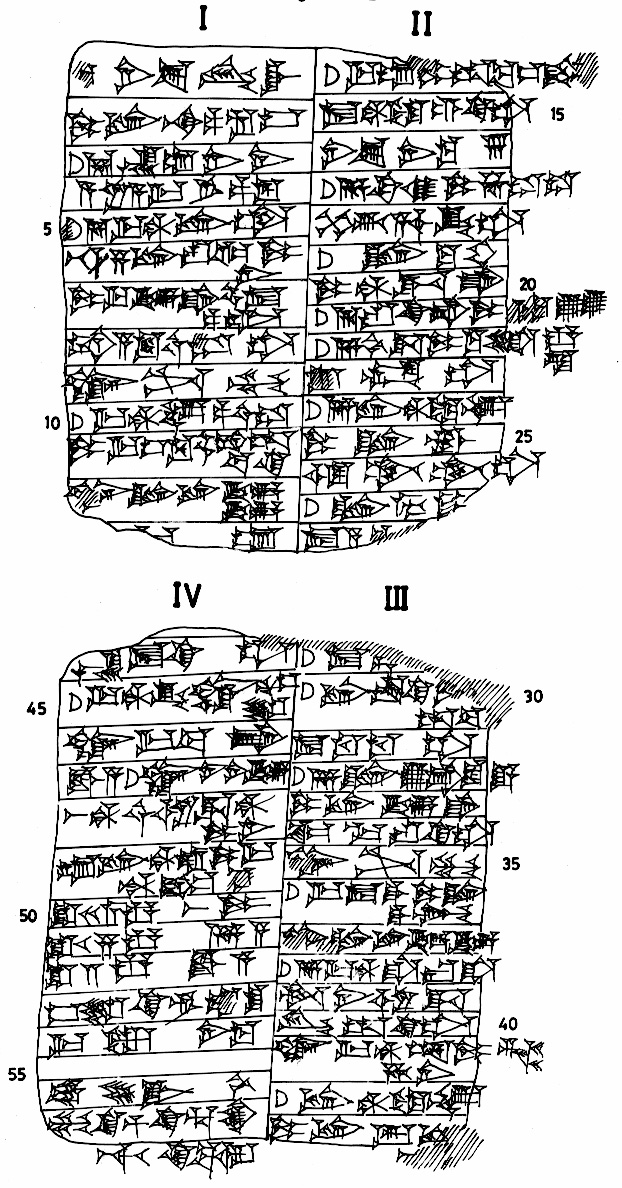
“Total: 14 runaway men.”
A work gang is being put together for an orchard on the edge of the province. Most of the men on the list had once run away.
The tablet comes from Girsu, in what is now southern Iraq, around 2049 BC, the 46th year of King Šulgi. It lists each man with his father and, often, where he came from, and it ends by handing the whole group to a man named Ur-dam “for the orchard of the boundary”.
Who was on the list
Each entry starts with a single wedge, the scribe’s tally mark for one person. Many entries then add zah3, “runaway”: “1 runaway: Enum-ili”, “1 runaway: Dimi, son of Hadudu”, “1 runaway: Kuda, son of Ku-likalla, from the Emah”.
The places of origin read like a map of southern Babylonia. One man comes “from the house of Ninmar”, a goddess’s temple. Others come from the Emah, from E-tultul, from Kamari, from Ur and from Nippur. One, Ur-Šulpa’e, is “a worker of Gu’abba”, a harbour town in the province of Girsu.
Some are described more closely. Enum-ili is “the votive gift of Ur-nig, the shepherd”, a person given to a temple. Ur-Igalim is “the gardener”. Ur-Šauša is listed as ARAD2 i3-pa3-da, which may mean “a slave who was found”, though it may also be a name, Ipada.
Several entries add giri3, “via”, with an official’s name: Nimmu, Lugal-lusasa, Ur-Nanše, Ur-Bagara. These were probably the men who brought the workers in.
Adding them up
The totals stand at the end: 19 men, plus one son if we read a damaged sign rightly; 14 runaways; 2 men of the category SIG7-a, a term whose meaning is debated. Then: {gesz}kiri6 ki-sur-ra-sze3 ur-dam i3-dab5, “for the orchard of the boundary, Ur-dam took them over”.
The tablet is broken in several places, so we can’t check every total against the surviving names.
A gang of the returned
Here we are speculating, but the simplest reading is that these were fugitives who had been caught or had come back, from many places, and were now put to work together under a new man. The record keeps track of where each one came from, perhaps so that his old household could be credited or charged.
Runaways were a constant concern of the Ur III state. Another of our Girsu tablets, The Hunt for the Palace’s Runaways, shows men sent out to catch them. This one may show what happened to some of them afterwards.
What the tablet doesn’t tell us
We don’t know where the boundary orchard was, or what the men did there.
We don’t know whether the runaways had been caught or had returned of their own accord.
We don’t know what SIG7-a means for the two men who carry it.
And we can’t read the broken parts, so some names, and perhaps some runaways, are lost.
The tablet in full (our translation)
Front, first column: ½ (?): Izu, the šešgal, son of Luna, overseer of the boats (?). 1 runaway: Enum-ili, the votive gift of Ur-nig, the shepherd. 1 runaway: Ur-Lulal; dead: […]-za (?); Lu-irisag, his son, son of Ur-saga, worker of the house of the šabra, from the bank of the canal (?). Via Nimmu. 1: Ur-Šulpa’e, son of Ur-gigir, worker of Gu’abba, via Lugal-lusasa. […] Ur-mes […] (rest broken).
Front, second column: 1: Ur-mes, son of Abbabil, from the house of Ninmar; Izu took (him) over; 9 (?). 1 runaway: Dimi, son of Hadudu, from Muš-ergal (?). 1: Lugal-durdu, son of Andaga. 1 runaway: Iribi, son of Nin-u’u. 1 runaway: Kuda, son of Ku-likalla, from the Emah. 1 runaway: Lu-Ninšubur, son of Lugal-me, from U-sukudsukud. 1: Lugal-ušur, son of E-a-[…], [from …] (rest broken).
Back, first column: […] 1: E-[…]. 1: Lu-Urum, son of Abba, from E-tultul. 1 runaway: Lugal-ušime, son of Lu-saga, from Kamari. Via Nimmu. 1: Ur-egal, son of Lugal-ušumgal, via Lugal-lusasa. 1 runaway: Ur-Šauša, a slave who was found (?), from Ur, via Ur-Nanše, son of Namhani. 1: Lu-Ninšubur, son of Lu-eb, man of […].
Back, second column: […] from Nippur. 1: Ur-Igalim, the gardener, via Ur-Bagara. SIG7-a: 1 Girini-isa; 1 Utu-padan, his son. Sealed document of Lu-dingira, son of Ur-Lisi. Total: 19 men, 1 son (?). Total: 14 runaway men. Total: 2 SIG7-a men. For the orchard of the boundary, Ur-dam took them over. Month Še-sag-ku. Year: Kimaš and Hurti were destroyed.
How we read it
Key lines in transliteration: szunigin 1(u) 4(disz) gurusz zah3-a, “total: 14 runaway men”; and {gesz}kiri6 ki-sur-ra-sze3 ur-dam i3-dab5, “for the orchard of the boundary, Ur-dam took them over”, where ki-sur-ra is “boundary” and i3-dab5 “took over”.
Uncertain: the broken passages, which we don’t fill; the opening “½”; the term SIG7-a; ARAD2 i3-pa3-da; several place names; and whether the totals match the list.
Our confidence: low to medium. The structure, the runaways and the purpose are clear; many details are not.
This translation is new and unofficial, made from the CDLI transliteration, and may contain errors. “Untranslated” means we found no translation on CDLI or in the tablet’s publication history (MVN 12, 1982, hand copies of British Museum tablets). Dates use the conventional middle chronology and are approximate.
Further reading
- CDLI artifact page for P116379
- CDLI Wiki, Šulgi, including the year names
- J. N. Reid, “Runaways and Fugitive-Catchers during the Third Dynasty of Ur” (2015)
- Wikipedia, “Girsu”
- Wikipedia, “Guabba”
- Wikipedia, “Third Dynasty of Ur”
- ePSD2, the electronic Pennsylvania Sumerian Dictionary
- Oracc, Ancient Mesopotamian Gods and Goddesses