
Index of translations of Sumerian tablets
Sumerian clay tablets that, as far as we could check, had no published English translation. We translate them ourselves. The page linked above is the index of the series. A new tablet is a new row there, not a list copied into every story.
All translations are new and unofficial, made from transliterations on the Cuneiform Digital Library Initiative (CDLI), and may contain errors. Tablet images are credited to the holding institutions and CDLI. Dates use the conventional middle chronology and are approximate.
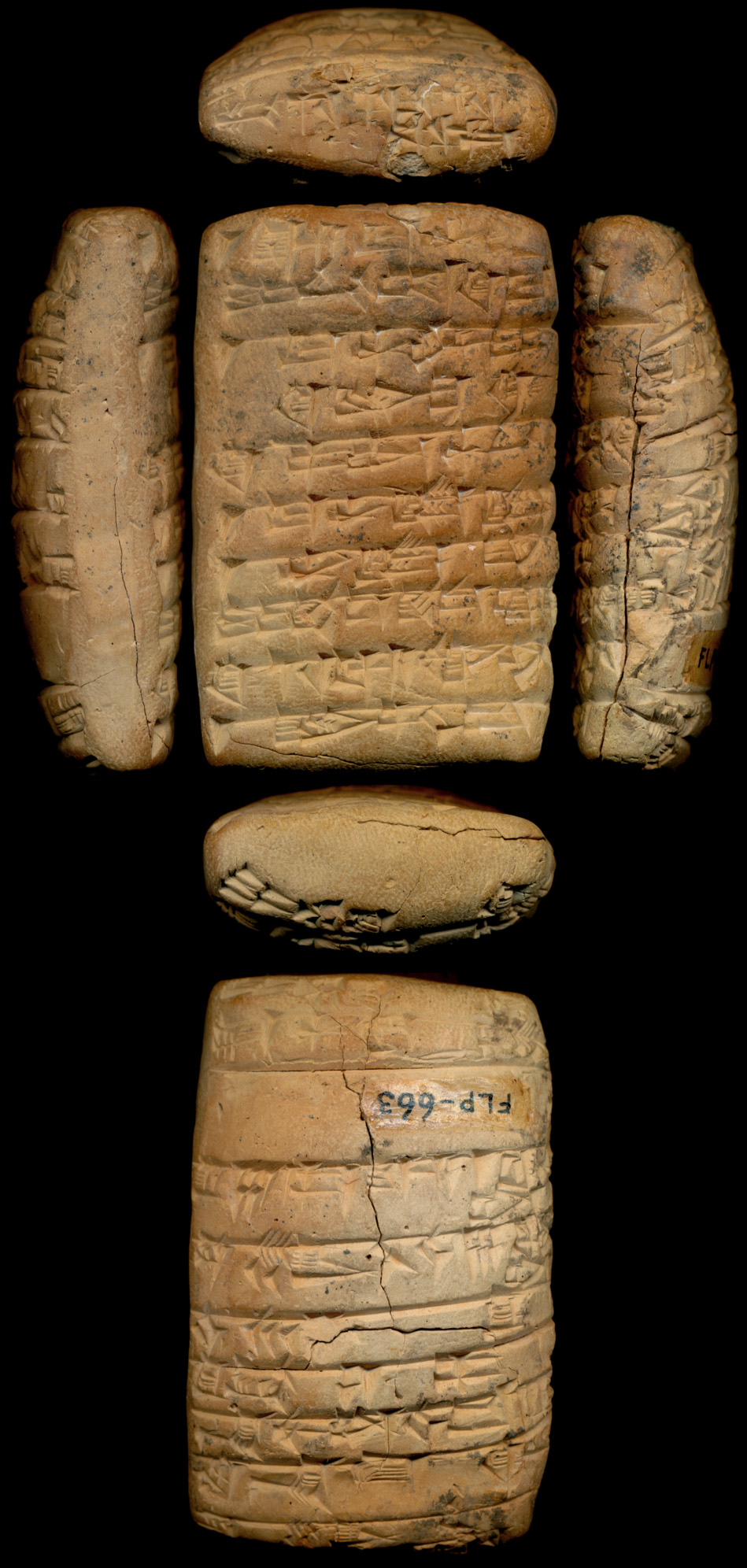
“Who came out of custody.”
Five men, from four different towns, ended up in Nippur in the same month. This tablet feeds them, and it says where they had been: in custody.
It comes from Nippur, in what is now southern Iraq, around 2040 BC, the seventh year of King Amar-Suen. It names each man, gives his home town and the official he was “with”, and then works out how much flour the five of them received over 24 days.
Five men, four towns
The first is Ur-dingira, a man of Ur. The second is Ur-Iškur, a man of a town written Kilu-KU, a reading we are not sure of. Both are listed “with the šabra of Nanna”, the chief administrator of the moon god’s household.
Then come Mansasa and Dingir-saga, both men of a place written NE-bila, again an uncertain reading. They are listed “with Huba’a, the general”. The Sumerian word is šagina, a high military rank.
The fifth is Lugal-pa’e, a man of Girsu, followed by the words e2 {d}szul-gi, “house of Šulgi”, probably the estate or temple of the deified king Šulgi.
All five carry the label SIG7-a, a worker category whose meaning is debated. We leave it as it is.
Twenty-four days of flour
The back of the tablet does the sums. Five men, 1⅔ litres of flour each per day, “from the 6th day of the month Še-sag-ku until the 30th day”. That is 24 days. The total is written 3(barig) 2(ban2), which is 200 litres.
The arithmetic checks: 5 times 1⅔ times 24 is exactly 200. It is a modest ration, enough to keep a man alive, not to fatten him.
Then the key line: en-nu-ta e3-a, “who came out of custody”. The word en-nu means watch, guard or custody, and e3 means “to go out”. Last come the place, “in Nippur”, the month and the year: “Huhnuri was destroyed”.
Released from what?
The plainest reading is that these men had been held under guard and were now released, or at least moved out of the guardhouse, and that the state was feeding them for the rest of the month.
Who they were is less clear. Men from Ur, Girsu and two other towns, each tied to a powerful official, might be workers who had run away and been caught, men handed over as security for a debt, or something else again. Here we are speculating; the tablet gives no reason for their custody.
Nippur was the religious centre of the land, the city of the god Enlil. Another of our tablets, Bail in Nippur, shows a man taken out of custody there on a guarantor’s oath. This one shows the paperwork from the other side: the flour bill.
What the tablet doesn’t tell us
We don’t know why the five men were in custody, or for how long.
We don’t know whether they were free after this month, or were being handed over to someone else.
We don’t know where Kilu-KU and NE-bila were, or even how their names should be read.
And we don’t know what SIG7-a means for these men.
The tablet in full (our translation)
Front: 1 SIG7-a man: Ur-dingira, a man of Ur. 1: Ur-Iškur, a man of Kilu-KU (?). With the šabra of Nanna. 1: Mansasa. 1: Dingir-saga. Men of NE-bila (?). With Huba’a, the general. 1: Lugal-pa’e,
Back: a man of Girsu, (of) the house of Šulgi. Total: 5 SIG7-a men, 1⅔ litres of flour each, from the 6th day of the month Še-sag-ku to the 30th day. Their flour: 200 litres. (For men) who came out of custody, one (ration) each (?). In Nippur. Month Še-sag-ku. Year: Huhnuri was destroyed.
How we read it
Key lines in transliteration: szunigin 5(disz) gurusz SIG7-a 1(disz) 2/3(disz) sila3 zi3-ta, “total: 5 SIG7-a men, 1⅔ litres of flour each”; and en-nu-ta e3-a, “who came out of custody”, from en-nu, “custody, guard”, and e3, “to go out”.
Uncertain: the two place names Kilu-KU and NE-bila; the sense of SIG7-a; the short phrase 1(disz)-ta after “custody”, which we read as “one each”; and what “with” an official means here.
Our confidence: medium. The names, the sums and the phrase about custody are clear; the men’s status and the reason for their custody are not.
This translation is new and unofficial, made from the CDLI transliteration, and may contain errors. “Untranslated” means we found no translation on CDLI or in the tablet’s publication history (MVN 3, 1975, hand copies of tablets in the Free Library of Philadelphia). Dates use the conventional middle chronology and are approximate.
Further reading
- CDLI artifact page for P113796
- CDLI Wiki, Amar-Suen, including the year names
- J. N. Reid, “Runaways and Fugitive-Catchers during the Third Dynasty of Ur” (2015)
- Wikipedia, “Nippur”
- Wikipedia, “Third Dynasty of Ur”
- ePSD2, the electronic Pennsylvania Sumerian Dictionary
- Oracc, Ancient Mesopotamian Gods and Goddesses