
Index of translations of Sumerian tablets
Sumerian clay tablets that, as far as we could check, had no published English translation. We translate them ourselves. The page linked above is the index of the series. A new tablet is a new row there, not a list copied into every story.
All translations are new and unofficial, made from transliterations on the Cuneiform Digital Library Initiative (CDLI), and may contain errors. Tablet images are credited to the holding institutions and CDLI. Dates use the conventional middle chronology and are approximate.
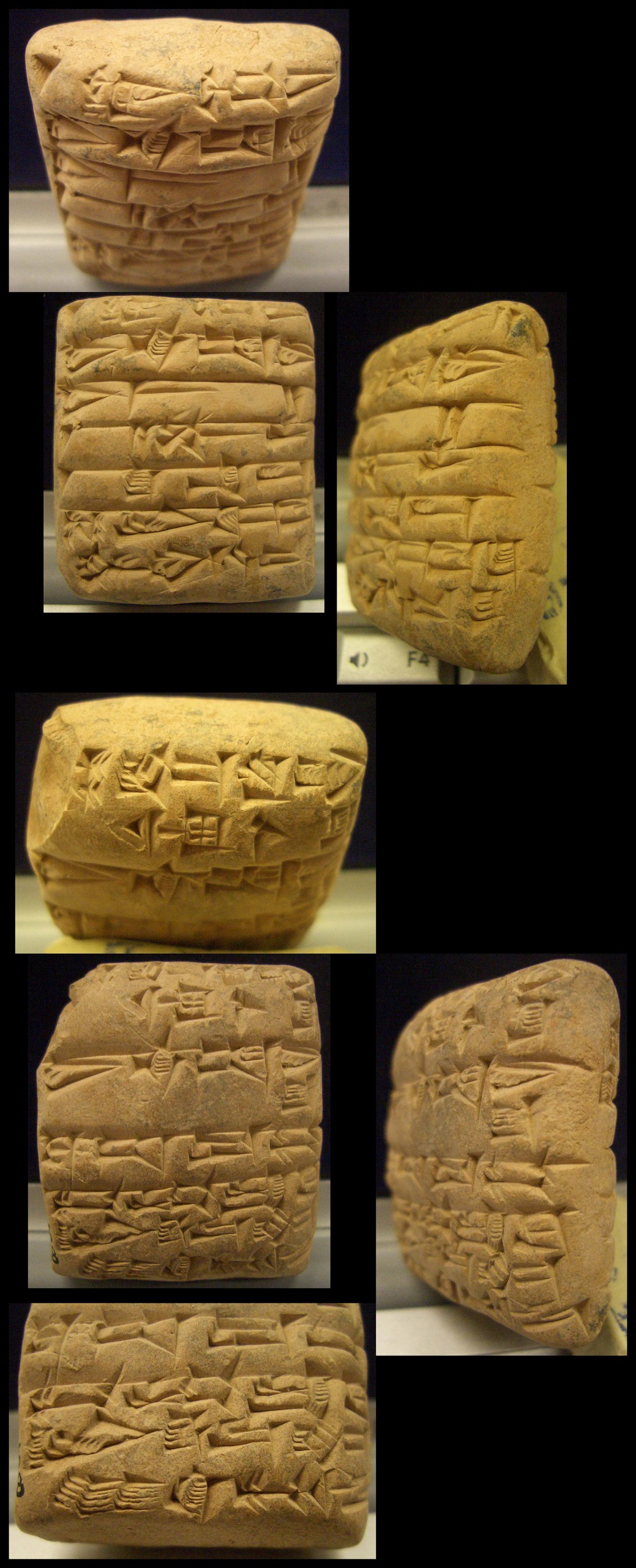
“Once they have sworn the oath, Ina-ṣir will take her away.”
This is a tablet about a donkey. More exactly, it is about who gets to lead her home.
It comes from Umma, in what is now southern Iraq, around 2045 BC, the second year of King Amar-Suen. In eleven short lines it names a jenny, a female donkey, with a foal; the man who claims her; and two witnesses who must swear before he can take her.
Eleven lines, one animal
The tablet opens with the animal: 1(disz) eme6 amar du3-a, “one jenny, with a foal”. The word eme6 is the female donkey. The next words, amar du3-a, mention a young animal; we read them as “that has foaled” or “with her foal”, but the exact phrase is unusual.
Then a name, Ina-ṣir, followed by i3-me-a, a form of the verb “to be”. We take it as “it is Ina-ṣir’s”: the animal is said to belong to him.
Next come two more names, Abu-ili and Šu-ennun, and the line that gives the tablet its weight: nam lu2-inim-ma-sze3 im-ta-e3-esz2, “they came forward as witnesses”. The word lu2-inim-ma is literally “man of the word”, the usual term for a witness.
On the back: nam-erim2-bi u3-ku5-esz2, “when they have sworn the oath about it”, then i3-na-s,i-ir-e ba-ab-tum2-mu, “Ina-ṣir will take (her) away”. Last comes the year: “Amar-Suen the king destroyed Urbilum”.
Witnesses first, then the donkey
The order matters. Ina-ṣir does not simply take the jenny. Two men first state what they know, then swear to it, and only after the oath may he lead her off.
The same pattern appears in another Umma tablet from these years, Once Inim-Utu Swears: once a witness has sworn, a named man “will take” what is in dispute. Our donkey tablet uses the same verbs.
Abu-ili and Ina-ṣir are Akkadian names, and Šu-ennun probably is too. That was ordinary in Ur III Umma, where Sumerian and Akkadian names sit side by side in the same records.
Why a donkey was worth a tablet
Donkeys were the work animals of the age, used to pull, plough and carry. A jenny with a foal was two animals, or the promise of more.
Here we are speculating, but a tablet like this suggests a dispute: someone else may have held the jenny, or her ownership had been questioned. The scribe recorded the outcome, not the quarrel.
What the tablet doesn’t tell us
We don’t know who had the donkey before, or who challenged Ina-ṣir’s claim, if anyone did.
We don’t know what the witnesses said. The tablet records only that they came forward and would swear.
We don’t know where the oath was taken or before whom. No judge or official is named.
And we can’t be sure of the phrase amar du3-a. It may mean the jenny had given birth, or that her foal went with her.
The tablet in full (our translation)
Front: 1 jenny with a foal (?): it is Ina-ṣir’s (?). Abu-ili (and) Šu-ennun came forward as witnesses.
Back: When they have sworn the oath about it, Ina-ṣir will take her away. Year: Amar-Suen the king destroyed Urbilum.
How we read it
Key lines in transliteration: nam lu2-inim-ma-sze3 im-ta-e3-esz2, “they came forward as witnesses”, where lu2-inim-ma is “witness” and e3 “to go out”; nam-erim2-bi u3-ku5-esz2, “when they have sworn the oath about it”, with nam-erim2 … ku5, literally “to cut an oath”; and ba-ab-tum2-mu, “he will take (her) away”.
Uncertain: amar du3-a, which we read as “with a foal”; i3-me-a, which we read as “it is (his)”; and the unusual ending of ba-ab-tum2-mu, which we take as a future.
Our confidence: medium. The witnesses, the oath and the outcome are clear; the description of the animal and of the claim is not.
This translation is new and unofficial, made from the CDLI transliteration, and may contain errors. “Untranslated” means we found no translation on CDLI or in the tablet’s publication history (BPOA 1, 2006, a volume of transliterations of British Museum tablets). Dates use the conventional middle chronology and are approximate.