
Index of translations of Sumerian tablets
Sumerian clay tablets that, as far as we could check, had no published English translation. We translate them ourselves. The page linked above is the index of the series. A new tablet is a new row there, not a list copied into every story.
All translations are new and unofficial, made from transliterations on the Cuneiform Digital Library Initiative (CDLI), and may contain errors. Tablet images are credited to the holding institutions and CDLI. Dates use the conventional middle chronology and are approximate.

Nippur, around 2024 BC, the eighth month of the year. A man named Eki is in custody. A farmer named Lu-Nanna comes and takes him out. Before the matter is closed, Lu-Nanna makes a promise and seals it with an oath by the king’s name: if Eki takes off, Lu-Nanna will bring him back.
Four thousand years before modern bail bonds, here is the same basic idea, in a handful of short lines of clay.
What the tablet says
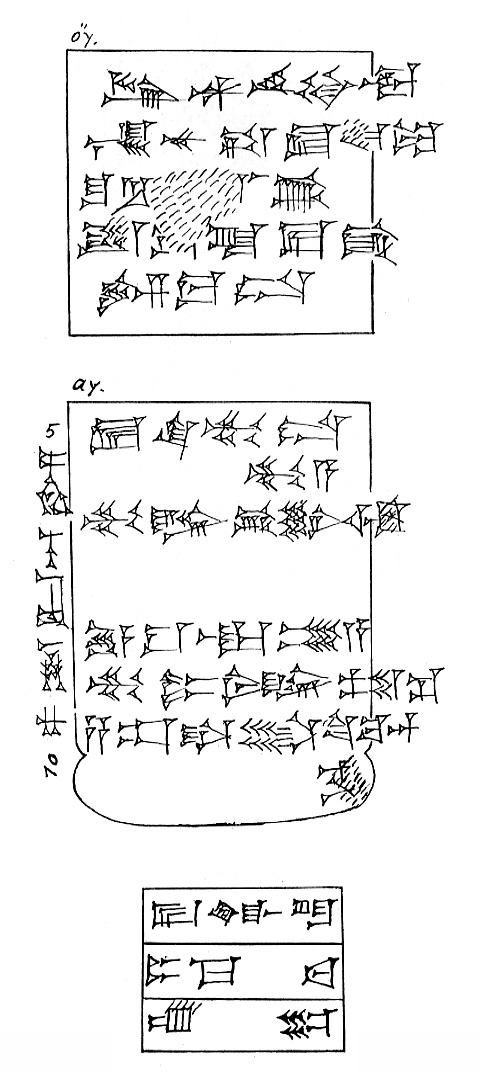
The text is short enough to quote almost in full. “Lu-Nanna, the farmer, took Eki out of custody. If Eki quits, Lu-Nanna will bring Eki back. He swore by the king’s name.”
The word translated “custody”, en-nu, means “guard, watch”, and by extension “imprisonment” or “prison”. So Eki had been held under guard, and Lu-Nanna took personal responsibility for him.
The tablet adds that the commissioner (maškim) was a man called Ur-Iškur. That is the official recorded as overseeing the procedure. And the clay carries the impression of a seal: “Ekigala, son of Maba, scribe”.
The gaps in the story
This little contract leaves a lot unsaid, and it’s worth listing the gaps honestly.
We don’t know why Eki was in custody. The tablet does not say whether he owed a debt, had run away before, or was caught up in a legal case. It does not call him enslaved, a debtor or a criminal, and neither will we.
We don’t know how Lu-Nanna and Eki were connected. Was the farmer an employer, a relative, a friend? The tablet doesn’t say.
We don’t know what happened next. Did Eki stay? Did Lu-Nanna ever have to go looking for him? The record ends with the oath.
And there’s a teasing puzzle on the seal. “Eki” looks like it could be a short form of “Ekigala”. If so, the man released might have sealed the document himself. But that is speculation. The seal could just as well belong to another party, or to the scribe who wrote the tablet.
Custody, flight and the king’s name
In the Ur III state (about 2112 to 2004 BC), detention was one of the tools used to control and coerce labour. Historian J. N. Reid, who studied punishment in this period, notes that runaways often appear “living under guard”. Liability was backed up by oaths sworn in the name of the king. In our tablet, that oath turns a private promise into something with the weight of royal authority behind it.
The clause about what Eki might do is interesting in itself. It literally says something like “if he stands at the side of quitting”. The idea comes from work: to quit, to be idle, to leave one’s post. In a contract like this, it means disappearing.
A royal wedding in the date
The tablet is dated by one of the year names that Ur III scribes used instead of numbers: “the year the governor of Zabšali married the king’s daughter”. This is the fifth year of Ibbi-Suen, the last king of Ur. The full version of the year name gives the princess’s name, Tukin-hatti-migriša. Zabšali was a land on the eastern edge of the Ur III world. About seven years earlier, Ibbi-Suen’s predecessor Šu-Suen had named his seventh year for destroying “the land of Zabšali”. Now a marriage tied it to the royal family.
So while Eki and Lu-Nanna were sorting out a very local problem in Nippur, the year itself was named after high politics on the frontier.
The tablet in full (our translation)
Front: Lu-Nanna, the farmer, took Eki out of custody. If he (Eki) sets himself to quitting (= runs off),
Back: that he (Lu-Nanna) will bring Eki back, he swore by the king’s name. Month: Apin-du’a (month 8). Year: the governor of Zabšali married the king’s daughter. Commissioner: Ur-Iškur.
Seal: Ekigala, son of Maba, scribe.
How we read it
Key lines in transliteration: en-nu-ta e2-ki i3!(MUNUS)-dab5, “he took Eki out of custody”, and a2 ga2-la dag-ga im-ma-gub, “if he sets himself to quitting”.
Uncertain: the “quitting” clause is clear in meaning but not in its literal grammar. The dictionary gives ŋala dag as “to be idle, to cease”. In the word “took”, the editor corrects a miswritten sign (the “!” marks this), a standard correction.
Our confidence: medium-high. This is the most straightforward text in our series.
This translation is new and unofficial, made from the CDLI transliteration, and may contain errors. “Untranslated” means we found no translation on CDLI or in the tablet’s publication history (a hand copy in NRVN 1, 1965, and a collation in 1975). One caveat: Reid’s 2015 study “Runaways and Fugitive-Catchers” (JESHO 58) discusses Ur III custody and flight, and we have not checked whether it quotes this tablet. Dates use the conventional middle chronology and are approximate.
Further reading
- CDLI artifact page for P122219
- J. N. Reid, “Punishment for the Coercion of Labour during the Ur III Period” (2023)
- CDLI Wiki, Ibbi-Suen, including the year names
- Wikipedia, “Ibbi-Sin”
- Wikipedia, “Third Dynasty of Ur”
- ePSD2, the electronic Pennsylvania Sumerian Dictionary
- Oracc, Ancient Mesopotamian Gods and Goddesses