
Index of translations of Sumerian tablets
Sumerian clay tablets that, as far as we could check, had no published English translation. We translate them ourselves. The page linked above is the index of the series. A new tablet is a new row there, not a list copied into every story.
All translations are new and unofficial, made from transliterations on the Cuneiform Digital Library Initiative (CDLI), and may contain errors. Tablet images are credited to the holding institutions and CDLI. Dates use the conventional middle chronology and are approximate.

In the seventh month of the year that Ibbi-Suen became king of Ur (around 2028 BC), in the province of Umma in what is now southern Iraq, a goat went missing. Not a herd and not a temple treasure. One goat.
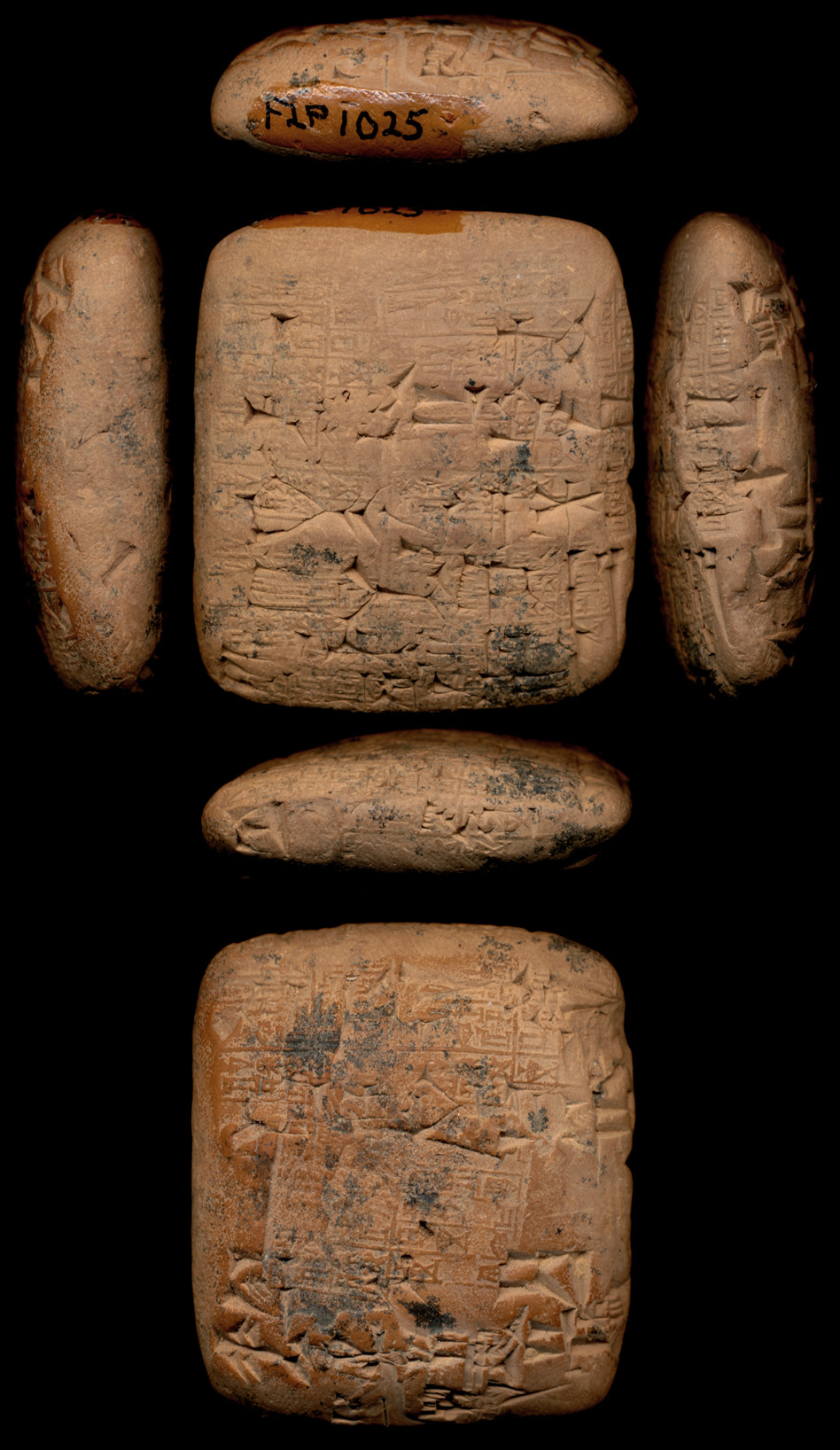
A scribe recorded what happened on a small clay tablet. The front has just six short lines. An oath had been sworn. The goat had disappeared. And then a name, pressed into wet clay more than four thousand years ago: Ur-Šulpae stole it and cooked it.
A crime report in six lines
Most tablets from this period are bookkeeping: so many sheep received, so much barley paid out. This one has the same shape as a routine receipt. What makes it unusual is the explanation in the middle, which reads like a tiny police report.
The tablet lists the facts in this order: one goat; an oath was sworn about it; it had gone missing; Ur-Šulpae stole it and cooked it. On the back, the scribe notes that the goat is booked out “from Alulu”. Alulu was probably the herdsman or official who answered for the animal, although the tablet doesn’t give his job. Last comes a note that this is a “sealed document of the governor”, and the governor’s seal is impressed on the clay. It reads: “Ibbi-Suen, mighty king, king of Ur, king of the four quarters: Dadaga, governor of Umma, is your servant.”
So a single stolen goat ended up on paperwork carrying the authority of the governor himself.
What the tablet doesn’t tell us
It’s tempting to fill in the gaps, so let’s be clear about where they are.
We don’t know who swore the oath. It might have been Alulu clearing himself, Ur-Šulpae admitting the deed, or a witness. The text doesn’t say.
We don’t know who Ur-Šulpae was, why he took the goat, or what happened to him afterwards. The tablet records the theft and nothing else. No punishment is mentioned.
We don’t even know exactly how the goat was cooked. The verb means “to cook” or “to heat”. “Roasted” is a tempting guess, but it is only a guess.
And one line is a real puzzle. Line 3 might connect the goat to Šara, the patron god of Umma, perhaps through a “silver ring” or “leash”. If so, the goat may have belonged to the god. But the reading is far from secure, so we won’t call it a sacred goat.
Why write this down at all?
Here we are speculating, but the most likely answer is bookkeeping. If a goat booked to Alulu vanished, someone would expect him to account for it. This tablet, with the governor’s seal, probably cleared the animal from his responsibility. Perhaps the oath was how he showed he wasn’t to blame. It is a reminder that, in this world, a written record could protect you as well as accuse you.
The world behind the goat
Umma was one province of the state historians call the Third Dynasty of Ur, or “Ur III”, which ran southern Mesopotamia from about 2112 to 2004 BC through provinces like Umma, and through written accounts.
The governorship of Umma stayed in one family. Three brothers held it in turn: Ur-Lisi, then Aakala, then Dadaga, who governed from the seventh year of King Šu-Suen until at least Ibbi-Suen’s third year. Our tablet, from Ibbi-Suen’s first year, falls in Dadaga’s term.
Ibbi-Suen was the last king of Ur, reigning about 2028 to 2004 BC. The records of the big provincial centres dried up after his third year. That makes this goat one of the last stories from the busy final years of Umma’s bookkeeping.
Oaths were a standard tool of legal life in the Ur III state, often sworn “in the name of the king”. Goods were valued in silver and barley, at a standard rate of one shekel of silver (about 8.3 grams) to 300 litres of barley. Our tablet doesn’t give the goat a price, so we won’t invent one.
The tablet in full (our translation)
Front: 1 goat, about which an oath was sworn; [obscure line, possibly mentioning the god Šara]; which had gone missing: Ur-Šulpae stole it and cooked it.
Back: From Alulu. Sealed document of the governor. Month: Min-eš (month 7). Year: Ibbi-Suen became king.
Seal: Ibbi-Suen, mighty king, king of Ur, king of the four quarters: Dadaga, governor of Umma, is your servant.
How we read it
The key lines, in the standard transliteration (Sumerian sounds written in our alphabet), are ur-{d}szul-pa-e3-ke4 ba-an-zuh / ba-an-sze6: “Ur-Šulpae stole it / cooked it”. Zuh means “to steal” and še6 means “to cook, heat”.
Uncertain: line 3, hul3 ku3-a {d}szara2?. Hul3 can mean “leash” or “ring” (or “bad”), ku3 can mean “silver” or “holy”, and even the god’s name is marked as doubtful by the editor. We leave it untranslated.
Our confidence: medium. Everything except line 3 follows well-known formulas.
This translation is new and unofficial, made from the transliteration on the Cuneiform Digital Library Initiative (CDLI). It may contain errors. “Untranslated” means we found no translation on CDLI or in the tablet’s publication history: it was published only as a hand drawing in 1975 (MVN 3, 303). Dates use the conventional middle chronology and are approximate.
Further reading
- CDLI artifact page for P113863
- CDLI Wiki, “The Province of Umma”
- CDLI Wiki, Ibbi-Suen, including the year names
- Wikipedia, “Third Dynasty of Ur”
- J. N. Reid, “Punishment for the Coercion of Labour during the Ur III Period” (2023)
- ePSD2, the electronic Pennsylvania Sumerian Dictionary
- Oracc, Ancient Mesopotamian Gods and Goddesses
Also useful, and not linked here because we have not pinned a stable page: CDLJ 2017:2 on barley-to-silver price ratios, and the Oracc metrology tables.